

Abacombacy
A means with which to predict the future through the use of various patterns of dust. This has been known in some practices to include the use of the ashes of the recently deceased.
Abada
(Also known as; the Nillekma or the Arase) A type of unicorn. They are similar to the Unicorn except they have two crooked horns instead of one straight one. They are a dark bay color, have a warthog tail, and are a little larger than a donkey. Like the unicorn, its horns are thought to act as an antidote to poisons. It reportedly lives in Africa, specifically the Congo.
Abaris
A Scythian high priest of Apollo and a renowned magician. He chanted the praises of Apollo, his master, so flatteringly that the god gave him a golden arrow on which he could ride through the air like a bird. Therefore, the Greeks called him the Aerobate. Pythagoras, his pupil, stole this arrow from him and thus accomplished many wonderful feats. Abaris foretold the future, pacified storms, banished disease, and lived without eating or drinking.
Abracadabra
An ancient magical word from Arabia. Its origin lie with Abraxas and it is believed that speaking this word would grant power over spirits.
Alien Big Cats
A population of large predatory cats such as Panthers and Puma’s, that are thought to be living wild in countries other than those to which they are native. Also known as phantom cats.
Abraxas
The Basilidian sect of Gnostics of the second century claimed Abraxas as their supreme god and said that Jesus Christ was only a phantom sent to Earth by him. They believed that his name contained great mysteries, as it was composed of the seven Greek letters which form the number 365, the number of days in a year. Abraxas, they thought, had under his command 365 gods, to whom they attributed 365 virtues, one for each day. The older mythologists consider Abraxas an Egyptian god, and demonologists describe him as a demon with the head of a king and with serpents forming his feet. Ancient amulets depict Abraxas with a whip in his hand, and his name inspired the mystic word abracadabra.
Absent Sitter
Psi term for a person, who is not present at the time of a psychic reading, for which the reading is given? Similar or alternative term is “proxy sitting.”
Abura-akago
( lit. “Red oil baby”) is a ghost in Japanese mythology. Abura-akago is illustrated
in Toriyama Sekien’s Konjaku Gazu Zoku Hyakki, as an infant spirit lapping oil out of an andon lamp. Sekien’s accompanying notes describe it: In the eighth town of Ōtsu in Ōmi (“Afumi”) province there exists a flying ball-like fire. The natives say that long ago in the village of Shiga there was a person, who stole oil, and every night he stole the oil from the Jizō of the Ōtsu crossroads, but when this person died his soul became a flame and even now they grow accustomed to this errant fire. If it is so then the baby which licks the oil is this person’s rebirth. Sekien seems to have based this image on a story from the Shokoku Rijin Dan, published in 1746, in which an oil merchant who steals oil from the Jizo statue at the Otsu crossroads is punished by being transformed posthumously into a ghostly flame.
Abura-sumashi
(“Oil Presser”) (Japanese Folklore) A creature from the island of Amakusa in Kumamoto prefecture (Japan). The abura-sumashi’s name can be translated as “oil wringer”, from abura (oil) and sumasu, a word from Amakusa dialect which means to “press, wring, or squeeze”. It seems to be related to the production of katashi-abura (“hardship oil”, taken from the seeds of the Camellia sasanqua plant) which was once prosperous in the Kawachi district of the island. In modern media the abura-sumashi is often depicted as a squat creature with a straw-coat covered body and a potato-like or stony head.
Abyssum
An herb used in the ceremony of exorcising a haunted house. Abyssum is consecrated by the sign of the cross and hung up at the four corners of the house.
Acheri
According to Indian lore, this is the ghost of a small girl. They live in mountain tops and come into villages to spread diseases, mostly to children. It does it by casting its shadow on those it wishes to infect.
Acutomancy
A form of divination utilizing sharp or pointed objects, such as needles, which are dropped in customary lots of seven onto a table surface, where the resulting random pattern is interpreted to gain insights into future events.
Acheropite
Term used to describe a super normally produced portrait on cloth. Another term, used for a cloth that bears the miraculous portrait of Jesus, is veronica, based on an apocryphal legend of a woman who wiped the face of Jesus during the procession to the Cross. The controversial Turin Shroud is one of the more interesting examples of such a cloth.
Activity
Conscious and Unconscious thoughts have an effect on outer manifestations this effect corresponds to the type and kind of thought.
Adam Kadmon
(“Primeval Man”). It’s a Kabbalistic term. Known especially from the symbolism of the Zohar; expressing the anthropomorphic conception of Jewish mysticism of the Divine realm.
A Tree of Life in the Kabala, in the form of; an idealized spiritual being. The Divine-emanated hypostases, the Sefiroth, are described symbolically as comprising a huge human-like figure: The three upper ones, Keter (crown), H?okhmah (wisdom), and Binah (intelligence), are the head of this figure; H?esed (love) is the right hand, Din (judgment) the left and (which is also the source of earthly evil), Tiferet (beauty) is the body or heart, Netsah? (Endurance)—The right leg, Hod (majesty) —the left, and Yesod (foundation) —the male organ.
The feminine element in the Divine realm, Malkhut (kingdom) or the Shekhinah (Divine presence), is depicted as a parallel female body. The concept of Adam Kadmon is the Kabbalah’s mystical interpretation of the imago dei—the creation of Man in the form of God (Gen. 1:26). The figure itself is first presented in a Jewish mystical Work in the ancient Shi’ur Komah text which belongs to Hekhalot and Merkabah mysticism, in which the Creator’s limbs are described, their names given, and their gigantic measurements listed. This mystical symbolism is based on the anthropomorphic interpretation of the verses in Song of Songs 5:10-16, where the “lover” is understood to be God Himself. Medieval Kabbalah used the Shi’ur Komah symbolism extensively, which may have had certain roots in Jewish mystical speculation of the Second Temple period. Various kabbalists in the middle Ages and early modern times used this symbol in different ways, some emphasizing its mythical-anthropomorphic meaning and some moderating its mythical impact, using it for the hidden realms within the Godhead.
Adamastor
The name given to a spirit once believed to haunt the Cape of Good Hope and prophesized doom for those seeking to sail around the Cape to India. Said to have; appeared to a famed explorer; Vasco de Gama on his expeditions to circumnavigate the cape to reach trade ports in the east.
Adept
According to the Theosophical Society and some occultists, adepts are individuals who, after stern self-denial and consistent self-development, have prepared themselves to assist in influencing the advancement of the world. The means by which this is attained are said to be long and arduous, but in the end the successful adept fulfills the purpose for which he was created and transcends other human beings. The activities of adepts are multifarious, being concerned with the direction and guidance of the activities of other human beings. Theosophists claim that their knowledge, like their powers, far exceeds that of other Mortals; they can control forces both in the spiritual and the physical realm and are said to be able to prolong their lives for centuries.
Adepts are also known as the Great White Brotherhood, rishis, rahats, or mahatmas. Ordinary people who earnestly desire to work for the betterment of the world may become “chelas,” or apprentices to adepts, in which case the latter are known as masters, but the apprentice must first have practiced self-denial and self-development in order to become sufficiently worthy. The master imparts teaching and wisdom otherwise unattainable (and thus resembles the guru in the Hindu tradition) and helps the apprentice by communion and inspiration. Helena Petrovna Blavatsky alleged that she was the apprentice of such masters and claimed that they dwelled in the Tibetan Mountains. The term adept was also employed by medieval magicians and alchemists to denote a master of their sciences.
Additor
A spirit board modified by the addition of a little round hollow box with a pointer protruding from it. The hollow box is a miniature cabinet that is believed to accumulate psychic force as it moves under the fingers over a polished board printed with the alphabet. The term auto scope has been given to such devices as the Ouija board, planchette, and Additor that are believed to facilitate the production of messages from an unknown intelligent source, at times the subconscious mind, at other times from discarnate spirits of the dead.
Adhab-Algal
The Islamic purgatory, where the wicked are tormented by the dark angels Munkir and Nekir.
Adjuration
A formula of exorcism by which an evil spirit is commanded, in the name of God, to do or say what the exorcist requires of him.
Adonai
A Hebrew word signifying “the Lord” and used by Jews when speaking or writing of “YHWH,” or Yahweh, the ineffable name of God. The Jews entertained the deepest awe for this incommunicable and mysterious name, and this feeling led them to avoid pronouncing it and to substitute the word Adonai for “Jehovah” in their sacred text. The ancients attributed great power to names; to know and pronounce someone’s name was to have power over them. Obviously one could not, like the Pagans, suggest that mere creatures had power over God. This custom in Jewish prayers still prevails, especially among Hasidic Jews, who follow the Kabala and believe that the Holy Name of God, associated with miraculous powers, should not be profaned. Yahweh is their invisible protector and king, and no image of him is made. He is worshiped according to his commandments, with an observance of the ritual instituted through Moses. The term “YHWH” means the revealed Absolute Deity, the Manifest, Only, Personal, Holy Creator and Redeemer.
Adytum
From the Greek term ‘aduton’, which means a place to which entrance is forbidden? This is a term alternatively used with ‘sanctum sanctorum’ or ‘Holy of Holies’ to describe the innermost innermost sanctum of a temple or church, or an area of sacred space in occult practices.
Aeromancy
A means with witch to predict the future through the specific and deliberate observation of the atmosphere. This can include the study of storms, comets, clouds, winds and other natural phenomena.
Aetities
A precious stone of magical properties, composed of iron oxide with a little silex and alumina, and said to be found in the stomach or neck of the eagle. It is supposed to heal falling sickness and prevent untimely birth. It was worn bound on the arm to prevent abortion and on the thigh to aid parturition.
Affectability
A term coined by parapsychologist Charles Stuart implying susceptibility to feedback in a situation where the subject in an ESP test is told the score on the previous run and asked to estimate the score on the next run. In this context, “affectable” subjects were those who consistently gave estimates that reflected their score on the immediately previous run; “unaffectable subjects” were not so influenced. Stuart also used the term “affectable” for subjects who were markedly extreme in expressing likes or dislikes to various possible interests, while “unaffectable” subjects were relatively indifferent to many of these interests. By measurement on a Stuart Interest Iventory, Stuart claimed that unaffectable subjects appeared to score higher than affectable on ESP perception. However, the term “affectability” can be applied generally to the degree of suggestibility of a subject.
After-Death Communication
(ADC) Also called post-mortem communication; literally means; communication with the deceased.
Afterlife
State of a surviving consciousness after the physical death of a living being.
Afturgangas
(Icelandic Folklore) Spirits of the deceased.
Afrit
In Arabian traditions, an afrit is the spirit of a murder victim which rises to avenge the crime. Traditions hold that the spirit rises from the slain person’s body in the form of ‘smoke rising from a fire’. The spirit form is malevolent and their activities are regarded as quite terrifying in nature. The time honored tradition of removing these violent spirits is to drive an iron nail into the ground in the location the murder was committed. See also “nailing down the ghost”.
Agaberte
Daughter of a certain giant called Vagnoste dwelling in Scandinavia. She was a powerful enchantress and was rarely seen in her true shape. Sometimes she would take the form of an old woman, wrinkled and bent, and hardly able to move about. At one time she would appear weak and ill, and at another tall and strong, so that her head seemed to touch the clouds. She effected these transformations with the smallest effort.
People believed her capable of overthrowing the mountains, tearing up the trees, drying up the rivers with the greatest of ease. They held that nothing less than a legion of demons must be at her command in order for her to accomplish her magic feats. She seems to be like the Scottish Cail-leach Bheur, a nature hag.
Agalmatomancy
From the Greek ‘algama’ (figure) and ‘manteia’ (divination), the divinatory practice of forecasting future events by reading features of statues. See also “Idolomancy”.
Agares
The Grand Duke of the eastern region of Hades, according to Johan Weyer,. He is shown in the form of a benevolent lord mounted on a crocodile and carrying a hawk on his fist. The army he protects in battle is indeed fortunate, for he disperses their enemies and puts new courage into the hearts of the cowards who fly before superior numbers. He distributes place and power, titles and prelacies, teaches all languages, and has other equally remarkable powers. Thirty-one legions are under his command.
Agartha
(Buddhists Theology) a civilization of people suspected by some to exist in the center of the Earth. It is believed to be a race of supermen and superwomen who occasionally come to the surface to oversee the development of the human race. It is also believed that this subterranean world has millions of inhabitants and many cities, its capital being Shamballa. The King of this world is believed to have given orders to the Dalai Lama of Tibet, who is his terrestrial representative. His messages are transmitted through certain secret tunnels connecting the inner world of Agartha with Tibet.
The famous Russian channel Nicholas Roerich, who was a channel for Ascended Master El Moyra, claimed that Lhasa, the capital of Tibet, was connected by a tunnel with Shamballa in the inner Earth. The entrance of this tunnel was guarded by Lamas who were sworn to secrecy. A similar tunnel was believed to connect the secret chambers at the base of the Great Pyramid at Giza with Agartha. The first public scientific evidence of Agartha’s existence is believed to have been uncovered in 1947 when Rear Admiral Richard E. Byrd of the United States Navy flew to the North Pole and, supposedly, instead of going over the pole he actually entered the inner Earth. In his diary, he tells of entering the hollow interior of the Earth, along with others, and traveling seventeen hundred miles over mountains, lakes, rivers, green vegetation, and animal life. He tells of seeing monstrous animals resembling the mammoths of antiquity moving through the brush. He is thought by some to have eventually found cities and a thriving civilization. (See: “Hollow Earth”)
Agate
According to ancient tradition, this precious stone protected against the biting of scorpions or serpents, soothed the mind, drove away contagion, and put a stop to thunder and lightning. It was also said to dispose the wearer to solitude, promote eloquence, and secure the favor of princes. It gave victory over enemies to those who wore it.
Agathion
A familiar spirit that was said to appear only at midday. It took the shape of a man or a beast, or even enclosed itself in a talisman, bottle, or magic ring.
Agathodaemon
A benevolent deity in Greek mythology. Known as; the “good spirit” of vineyards and cornfields. According to Aristophanes, Agathodaemon was honored by drinking a cup of wine at the end of a meal. He was represented pictorially in the form of a serpent or sometimes as a young man holding a horn of plenty, a bowl, and ears of corn. Winged serpents were also venerated by the ancient Egyptians, Chinese, and other peoples.
Agency
The imaginary ghost created for group Psychokinesis experiments in a séance-type setting.
Agent
(1) Person who attempts to communicate information to another in an ESP experiment. (2) The subject in a psycho kinesis experiment. (3) Person who is the focus of poltergeist activity.
Agimat
(Philipino Folklore) [also “anting-anting” and “bertud”] the equivalent to a talisman, amulet or charm. Generally depicted as Polygonal metallic objects, the agimat can also be of any material, from virtually any source such as: as a croc’s tooth, a precious stone or a mutya (supposedly the essence that falls from the heart of a banana tree). An agimat can protect its owner from harm or death caused by another person or evil spirits. Some agimats reportedly bring luck and even supernatural powers to the wearer. Agimats, in various forms, are still a popular commodity. In one Manila commercial district, they are sold openly.
Aglaophotis
A kind of herb said to grow in the deserts of Arabia and much used by sorcerers for the evocation of demons. Other plants were then employed to retain the evil spirits as long as the sorcerer required them. Possibly, a fictional herb, it’s mentioned occasionally in works on occultism. References to Aglaophotis and to Olieribos (both of which are said to be magical herbs) are made in the Simon Necronomicon.
The Greek doctor Dioscorides named Aglaophotis as a member of the peony family, Paeoniaceae. It has been speculated that the species paeonia officinalis, or the Europea peony, is the source of Aglaophotis, but there is little evidence to prove this theory. According to Dioscorides, peony is used for warding off demons, witchcraft, and fever. This is at odds with the presentation in the Necronomicon, in which it is used to call upon dark forces.
Ailuromancy
Divination through superstitions concerning cats. For example, a black cat crossing your path is a bad omen in the United States and Germany, although usually regarded as lucky in Britain. Owning a black cat is also believed to be lucky. A cat washing its face or ears, or climbing up furniture, is said to indicate rain; if the cat washes its face in the parlor, it may indicate visitors. It is a widespread belief that killing or mistreating a cat will bring ill fortune. This may arise from ancient religious beliefs concerning the cat as a sacred animal.
Akaname
(Japanese Folklore) “Filth licker”. A hideous type of Japanese bogeyman that quite literally licks dirty bathrooms clean with its tongue and the aid of poisonous saliva. It is believed that the monster may have originated as a way for parents to motivate their children to keep the bathroom clean.
Akasha
Akasha
(Sanskrit) In the Abhidharma taxonomies it is defined as the container within which the four ‘great elements’ (maha-bhuta) of earth, water, fire, and air find expression. Generally it is said to be of two kinds: limited by corporeality (in other words the space between objects), and unlimited or infinite. In some Abhidharma systems it is classified as one of the unconditioned (asa?sk?ta) phenomena (dharma).
Space is often used in Mahayana literature as a simile for the mind in its natural state, since the unlimited expanse of space, which is nothing in itself, is characterized by purity, immutability, and emptiness, and yet it acts at the same time as the ‘container’ or support for all phenomena without distinction. In the occult, it is believed to be one of the five elementary principles of nature according to Hindu mysticism. Akasha is the first of these principles, and out of it the others are created. These subtle principles, or tattvas, are related to The five senses of human beings and to basic elements of matter: earth (prithivi), water (apas), fire (tejas), and air (vayu). The all-pervading Akasha is responsible for vibrations of light and sound. Akasha is described in some mystical doctrines to be a mystical, spiritual substance where “memories” are stored since the beginning of time. It is one of the five elements in Hindu philosophy and is often described as a form of atmosphere or ether. The Akasha is thought by some to contain a record of everything that has ever happened, but also everything that will ever come to pass in the future. Theosophists believe that persons with special psychic powers can tap into the Akasha or “Astral Light”. They achieve this by using their astral bodies or “astral senses” to search for spiritual insights which have been stored for all eternity. According to ancient Indian tradition the universe consists of two fundamental properties. These are motion and the space through which motion takes place. This space is called the Akasha (Tib. nammkhah). It is also believed to be the substance that enables things to step through into reality and gain visible appearance, extension and corporeality. The Akasha relates to the three dimensional space of our sense perception and this is called the “mahakasha”. The nature of the Akasha is not limited only to these three dimensionalities; indeed it is made up of infinite dimensions comprising all possibilities of movement not only physical but spiritual as well. “Akasha” is derived from the root kash, meaning “to radiate, to shine” It also has the meaning of “ether” believed to be the medium of movement. The Akasha is thought to be indivisible, eternal and all pervading.
Akashi Records
“Memories” of all experiences since the beginning of time, believed by some mystical doctrines to be stored permanently in a spiritual substance (Akasha).
Akateko
(“Barehanded child”) (Japanese Folklore) A yōkai from the Aomori prefecture specifically in the city of Hachinohe. The akateko appeared as an infant’s hand hanging down from a tree. Akathaso – (Burmese Folklore) Evil spirits who inhabit trees.
Akathaso
(Burmese Folklore) Evil spirits who inhabit trees.
Akhnim
A town of Middle Thebais. Which; at one time possessed the reputation of being the habitation of the greatest magicians. The French traveler Paul Lucas (1664-1737), in his Second Voyage, speaks of the wonderful serpent of Akhnim, which was worshiped by the Muslims as an angel, and which the Christians believed to be the demon Asmodeus.
Akita
In 1969, Akita, Japan, was the site of one of the more prominent modern series of apparitions of the Virgin Mary. While praying, Sister Agnes Sasagawa, a young postulate of the Order of the Handmaids of the Eucharist, a Roman Catholic order community, received a locution, a clairaudient message, concerning how she should pray. She ascribed this voice to an angel. The content of the prayer, she later discovered, was the same as that given to the three children who had seen the Virgin Mary at Fatima. Sister Mary was deaf.
Four years later she received another locution, which happened to coincide with the development of the stigmata, a mysterious cross-shaped wound on her hand that refused to stop bleeding. The inner voice directed her to the chapel, where she saw the Virgin for the first time. She also heard a series of accompanying messages from the Virgin calling for prayer and sacrifice. The words seemed to come from a wooden statue of the Virgin located in the chapel.
She would see the Virgin two more times. The last of the three messages complained of problems of discord and compromise within the church reaching to the highest levels. These apparitions would probably have gone unnoticed had it not been for the accompanying phenomena. During the period when the apparitions were being received, the statue oozed a reddish substance from its right hand. Analyzed, it proved to be type AB blood. Then the statue was noticed to Perspire. Again the substance was analyzed and proved to be similar to human sweat. Then, several years later, the statue in the chapel began to emit tears from the eyes. All of the sisters saw the tears as did visitors to the convent.
The events at Akita challenge the more common explanations of skeptics concerning weeping statues as the substance coming from the eyes was not water (as would have been the case if it was due to mere condensation). In like measure, explanations generally attributed to bleeding statues do not appear applicable.
Akurojin-no-hi
(“Fire of the god of the bad road”) (Japanese Folklore) A ghostly flame, from the folklore of; the Mie prefecture in Japan. Akurojin-no-hi often appears on rainy nights, and people who encounter it and do not run away become gravely ill.
Akusala-mula
(Sanskrit; Pali, akusala-mula). Collective name for the three roots of evil, being the three unwholesome mental states of greed (raga), hatred (dve?a), and delusion (moha). All negative states of consciousness are seen as ultimately grounded in one or more of these three.
AL
According to Éliphas Lévi, this forms part of the inscription on a pentacle that was a frontispiece to the published Grimoire of Honorius, an antipope of the thirteenth century. The letters, used to designate a name of God, were reversed on the pentacle, said to be part of a ritual for the evocation of evil spirits. “AL” was also a word of considerable importance to magician Aleister Crowley. It was the name given to the revelation he received in 1904 that became the basis of his new system of thelemic magic, usually called Book of the Law or Liber AL. Crowley placed great store in numerology. In his system, AL equated to 31, the number which he felt held the key to unlocking the meaning of Liber AL.
Alaka
(Hindu Folklore) 1. Also called Alakapuri is a mythical city. It is the home of Kubera the king of Yakshas and the lord of wealth, and his attendants called yakshas. Mahabharata mentions this city as the capital of the Yakshas Kingdom. This city rivals the capital of Indra the king of the Devas.
2. Sanskrit word meaning “lock of hair”.
Alan
Deformed spirits from the folklore of the Tinguian tribe of the Philippines. They have wings, and their fingers and toes point backwards. Alans are said to take drops of menstrual blood, miscarried fetuses, afterbirth, or other reproductive waste and transform them into human children, whom they then raise as their own. They live near springs in extremely fine houses, made of gold and other valuables. The modern Alan spirit has long since left the Philippines, pointed their toes forward again and roam the wilds.
Alastor
An avenging deity or spirit, the masculine personification of Nemesis, frequently evoked in Greek tragedy. A cruel demon, which; According to Johan Weyer, filled the post of chief executioner to the monarch of Hades. The conception of him somewhat resembles that of Nemesis. Zoroaster is said to have called him “The Executioner.” Others identify him with the destroying angel. Evil genies were formerly called alastors. Plutarch says that Cicero, who bore a grudge against Augustus, conceived the plan of committing suicide on the emperor’s hearth, and thus becoming his “Alastor.”
Alchemy
The Science of turning the baser metals into gold or silver by chemical means. The byproduct, “Quicksilver,” was thought to have magical powers. This was a very perfected science in Egyptian times and lasted all the way up into the 14th-16th Century A.D. When some of the alchemy methods were lost due to wars and fires that were amid in those times.
Alectorius
This stone is about the size of a bean, clear as crystal, sometimes with veins the color of flesh. It is said to be taken from the cock’s stomach. According to ancient belief, it renders its owner courageous and invincible, brings him wealth, assuages thirst, and makes the husband love his wife, or, as another author has it, “makes the woman agreeable to her husband.” Its most wonderful property is that it helps to regain a lost kingdom and acquire a foreign one.
Alectormancy
Also spelled as ‘alectromancy’ and ‘alectryomancy’, from the Greek ‘alectruon’ (cock) and ‘manteia’ (divination), the archaic divinatory practice of forecasting future events by placing a rooster or hen into a circle of grain, around which letters of the alphabet have been arranged.
Answers to questions concerning the future are interpreted by which letters the bird chooses to feed at. Other variations included diving the future from the crowing of a cock or by reciting The letters of the alphabet, making special note of those letters which are spoken when a cock crows. The practice was especially popular in the Roman Empire to identify robbers and thieves.
Aleuromancy
(from Greek halo, ‘salt’, and manteia, divination), The divinatory practice of utilizing flour to forecast future events. One method involved mixing flour and water in a bowl and then interpreting the patterns left at the bottom and sides of the vessel. Another practice involved writing sentences upon slips of paper, which were then baked into balls of dough and divided amongst participants to learn their fates. The practice is still in existence in the form of Chinese fortune cookies.
Alfridarya
A belief resembling astrology, which claims that, all the planets in turn influence the life of man, each one governing a certain number of years.
Alga
A word from the Kabala formerly used by rabbis for exorcisms of the evil spirit. It is made up of the initial letters of the Hebrew words, Athah Gabor leolam, Adonai, meaning, “Thou art powerful and eternal, Lord.” Among superstitious Christians it was also a favorite weapon with which to combat the evil one, as late as the sixteenth century. It is found in many books on magic, notably in the Enchiridion ascribed to Pope Leo III.
All Hollows Eve (Halloween)
The day of dressing up in costumes and passing out candy on October 31st started out as a pagan festival of the dead. This night is still believed by many to be the night when spirits, demons, and other supernatural beings are their strongest.
Allat
Goddess of the ancient Arabs of pre-Islamic times and one of the three chief goddesses of Mecca. She is associated with the god Dhu-shara, known as Allah (supreme god), and worshiped in the form of a rectangular stone, reminiscent of the later Kaaba of Mecca. Allat is mentioned in the Koran as a pagan goddess. She is said to have been joint ruler with Allah and judge of the afterlife. She is mentioned in the Qur’an (Sura 53:19), which indicates that pre-Islamic Arabs considered her as one of the daughters of Allah along with Manat and al-‘Uzzá. She is equated with the Greek Athena and Tyche and the Roman Minerva. She is frequently called “the Great Goddess” in Greek in multi-lingual inscriptions. According to Wellhausen, the Nabataeans believed al-Lat was the mother of Hubal (and hence the mother-in-law of Manat).
Alli Allahis
A continuation of the old sect of the Magi, priests of ancient Persia.
Alliance of Solitary Practitioners
A loose association of Wiccan and Pagan covens and solo practitioners. Its web site, located at http://www.witchcraft.net/ASP/, provides both information and a means for solitaries to communicate with each other. Solitaries may also become formal members of ASP. By the end of the 1990s, ASP reported more than 1,300 members in more than 40 countries. While agreeing on a few basics concerning Paganism, solitary practitioners manifest manifest the widest possible variation in belief and practice.
Almanach du Diable
A French almanac containing predictions for the years 1737 and 1738 and purported to be published from hell. The book, which was a satire against the Jansenists, was suppressed on account of some over-bold predictions and became very rare. The authorship was ascribed to Quesnel, an ironmonger at Dijon. The Jansenists replied with a pamphlet directed against the Jesuits, which was also suppressed. Entitled Almanac de Dieu and dedicated to M.Carré de Montgeron, it was published in 1738 and claimed satirically to be printed in heaven.
Almoganenses
The name given to certain Spanish peoples who, by the flight and song of birds, meetings with wild animals, and various other means, foretold coming events. According to the fifteenth-century humanist Laurentius Valla, “They carefully preserve among themselves books which treat of this science, where they find rules of all sorts of prognostications and predictions.
The soothsayers are divided into two classes, one, the masters or principals, the other the disciples and Aspirants.” Another kind of knowledge is also attributed to them, that of being able to indicate the way taken by horses and other beasts of burden which are lost, and the road followed by one or more persons. They can specify the kind and shape of the ground, whether the earth is hard or soft, covered with sand or grass, whether it is a broad road, paved or sanded, or narrow, twisting paths, and tell also how many passengers are on the road. They can follow the track of anyone and cause thieves to be apprehended. Those writers who mention the Almoganenses, however, do not specify either the period when they flourished or the country or province they occupied, but it seems possible from their name and other considerations that they were Moorish.
Almusseri
A nineteenth-century secret society resembling African associations, with secret rites akin to those of the Cabiric and Orphic Mysteries. Their reception took place once a year in a wood, where the candidate pretended to die. The initiates surrounded the neophyte and chanted funeral songs. He was then brought to the temple erected for the purpose and anointed with palm oil. After 40 days of probation, he was said to have obtained a new soul, was greeted with hymns of joy, and conducted home.
Alopecy
A species of charm by the aid of which one can bewitch an enemy whom one wishes to harm
Alpha Wave
A pattern of; smooth regular electrical oscillations in the human brain. These normally occur when a person is awake and relaxed. The machine used to record these waves is called an electroencephalograph, or EEG. Alpha waves have a frequency of 8 to 13 hertz. Also called; “alpha rhythm”.
Alphitomancy
An ancient method of divination used to prove the guilt or innocence of a suspected person with a loaf of barley. When many persons were accused of a crime and it was desired to find the true culprit, a loaf of barley was made and a portion given to each of the suspects. The innocent people suffered no ill effects, but criminals were said to betray themselves by an attack of indigestion.
Alpiel
An angel or demon who, according to the Talmud, presides over fruit trees.
Alraun
(German Folklore) Images shaped from the roots of mandrake (see Mandragoras) or from ash or briony. The term was popular in Germany, where it was also used to indicate a witch or a magician. An alraun had to be treated with great care because of its magical properties. It was wrapped or dressed in a white robe with a golden girdle, bathed every Friday, and kept in a box; otherwise it was believed to shriek for attention. Alrauns were used in magic rituals and were also believed to bring good luck. But possession of them carried the risk of witchcraft prosecution, and in 1630 three women were executed in Hamburg on this charge.
The alraun was difficult to get rid of because there was a superstition that it could only be sold at a higher price than bought, and there are legends that owners who tried to throw an alraun away found it returned to their room. According to the folklore, an alraun assisted easy childbirth, and water in which it had been infused prevented swellings in animals. Because of the large demand for alrauns, they were often carved from the roots of briony when genuine mandrakes were difficult to find. They were exported from Germany to various countries and sold in England during the reign of Henry VIII.
Alrunes
Female demons or sorceresses, the mothers of the Huns in ancient Germany. They took all sorts of shapes, but without changing their sex. The name was also given by Germans to little statues of old sorceresses, about a foot high. To these they attributed great virtues, honoring them as fetishes; clothing them richly, housing them comfortably, and serving them with food and drink at every meal. They believed that if these little images were neglected, they would bring misfortunes upon the household.
Altered States of Consciousness (ASC)
Also called altered states of awareness; a state of mental relaxation where people become more susceptible to impressions. Expression popularized by Charles T. Tart which can refer to virtually any mental state differing from that of the normal waking condition; of Parapsychological interest as possibly psi-conducive states; they include dreaming, hypnosis, trance, meditation of the yoga or Zen tradition, the hypnagogic-like state induced by the ganzfeld, and drug-induced states.
Amadeus
A visionary who experienced an apocalypse and revelations, in one of which he learned the two psalms composed by Adam, one a mark of joy at the creation of Eve, and the other the dialogue he held with her after they had sinned. Both psalms are printed in the Codex Pseudepigraphus Veteris Testamenti of Johann Albert Fabricius, published at Hamburg, 1713-33.
Amaimon
One of the four spirits who preside over the four parts of the universe. Amaimon is the governor of the eastern part, according to the grimoire, or magic manual, of the Lemegeton of Solomon, also known as the Lesser Key or Little Key.
Amalanhig
(Visayan mythology, particularly among Hiligaynon speaking groups) Amalanhig are Aswangs who failed to transfer their monstrosity causing them to rise from their graves to kill humans by biting their necks. It is a variant of the type of vampire native to the Philippines. In order to escape from Amanlanhigs, one runs in zigzag direction since they can only walk in straight direction due to the stiffness of their body. One could climb high enough in a tree to be out of their reach. One can also avoid them in lakes and rivers since Amanlanhigs are scared of deep bodies of water. Amalanhig are generally depicted as appearing identical to humans, though there is an enlargement of the upper canines in most individuals.
Amandinus
A variously colored stone, said to enable the wearer of it to solve any question concerning dreams or enigmas.
Amaranth
A flower that is one of the symbols of immortality. It has been said by occult magicians that a crown made with this flower has supernatural properties and will bring fame and favor to those who wear it. It was also regarded in ancient times as a symbol of immortality and was used to decorate images of gods and tombs. In ancient Greece, the flower was sacred to the goddess Artemis of Ephesus, and the name “amaranth”derives from Amarynthos, a hunter of Artemis And king of Euboea. There are many species of Amaranth, some with poetic folk names such as “prince’s feather” and “love-lies-bleeding.”
Amethyst
Gemstone believed to have occult properties, described by sixteenth-century writer Camillus Leonardus as “reckoned among the purple and transparent stones, mixed with a violet color, emitting rosy sparkles.” The Indian variety is the most precious. When made into drinking cups or bound on the navel, it was claimed to prevent drunkenness. It was also believed to sharpen the wit, turn away evil thoughts, and give knowledge of the future in dreams. Drunk in a potion, it was thought to expel poison and render the barren fruitful. In ancient times it was frequently engraved with the head of Bacchus and was a favorite with Roman women.
Amiante
A species of fireproof stone, which Pliny and the ancient demonologists recommended as excellent against the charms of magic.
Amniomancy
Divination by means of the caul or membrane that sometimes envelopes the head of a child at birth. From an inspection of this caul, wise women predicted the sort of future the baby would have. If it were red, happy days were in store for the child, or if lead-colored, he would have misfortunes
Amorphous
Having no definite form or shape, spirits and ghosts often appears in mist-like forms or shapes.
Amoymon
According to an ancient grimoire, Amoymon is one of the four kings of Hades, of which the eastern part falls to his share. He may be invoked in the morning from nine o’clock till midday and In the evening from three o’clock till six. He has been identified with Amaimon (or Amaymon). Asmodeus is his lieutenant and first prince of his dominions.
Amulet
It is believed that an amulet that is worn around a person’s neck can mean one of two things.
1) the amulet being worn is the dwelling place of spiritual entities or
2) the amulet being worn is being used to ward off evil or bad luck.
Anachitis
(Also: anancitis) In divination meaning “stone of necessity” is a stone used to call up spirits from water. It was described as a type of diamond by Martin Rulandus the Elder. The stone was used in antiquity by the Magi, being described by Pliny the Elder as one of their “dreadful lies”. Its use had fallen out of favor by the middle ages.
Anancithidus
Described by the sixteenth-century physician Camillus Leonardus as “a necromantic stone, whose virtue is to call up evil spirits and ghosts.”
ANANISAPTA
A kabalistic word made up from the initial letters of the prayer Antidotum Nazareni Auferat Necene Intoxicationis; Sanctificet Alimenta, Poculaque Trinitas Alma. When written on virgin parchment, it is said to be a powerful talisman to protect against disease.
Anathema
A formal ecclesiastical ban, curse, or excommunication. The name was given by the ancients to certain classes of votive offerings, to the nets that the fisherman laid on the altar of the sea nymphs, to the mirror that Laïs consecrated to Venus, and to offerings of vessels, garments, instruments, and various other articles. The word was also applied to the victim devoted to the infernal gods, and it is this sense that is found among Jews and Christians, referring either to the curse or its object. The man who is anathematized is denied communication with the faithful, and he is delivered to the demon if he dies without absolution. Through the centuries the church often lavished anathemas upon those considered heretics and enemies, though many such as St. John Chrysostom taught that while it was well to anathematize false doctrine, people who have strayed should be pardoned and prayed for. The use of anathemas has largely dropped out of contemporary Christianity. Magicians and sorcerers once employed a sort of anathema to discover thieves and witches. Some limpid water was brought, and in it was boiled as many pebbles as there were persons suspected. The pebbles were then buried under the doorstep over which the thief or the sorcerer was to pass, and a plate of tin was attached to it, on which was written the words “Christ is conqueror; Christ is master.” Every pebble must bear the name of one of the suspected persons. The stones are removed at sunrise, and the one representing the guilty person is hot and glowing. The seven penitential psalms must then be recited, with the Litanies of the Saints, and the prayers of exorcism pronounced against the thief or the sorcerer. His name must be written in a circular figure, and a triangular brass nail driven in above it with a hammer, the handle of which is of cypress wood, while the exorcist declares, “Thou are just, Lord, and just are Thy judgments.” At this, the thief would betray himself by a loud cry. If the anathema has been pronounced by a sorcerer, and one wishes merely to escape the effects of it and cause it to return to him who has cast it, one must take, on Saturday, before sunrise, the branch of a one-year-old hazel tree and recite the following prayer: “I cut thee, branch of this year, in the name of him whom I wish to wound as I wound thee.” The branch is then laid on the table and other prayers said, ending with “Holy Trinity, punish him who has done this evil, and take him from among us by Thy great justice, that the sorcerer or sorceress may be anathema, and we safe.” Harrison Ainsworth’s famous novel, The Lancashire Witches, deals with the subject and the Pendleton locality in England.
Ancestor Worship
A religious practice very common in the ancient world, in which one’s deceased ancestors were believed to reach the status of deities after death. Sometimes rituals of spirit necromancy Would be performed to consult with the spirits of these deified ancestors for guidance or the receiving of blessings.
Anchimayen
(Chilean/Mapuche Folklore) in the Mapudungun language, also spelled “Anchimallén” or “Anchimalguén” in Spanish. It’s a mythical creature in Mapuche mythology. Anchimayens are described as little creatures that take the form of small children, and can transform into flying spheres that emit bright light. They are the servants of a kalku (a type of Mapuche sorcerer), and are created using the corpses of children. Anchimayens are sometimes confused with Kueyen (the Mapuche lunar goddess), because she also produces a bright light. Anchimayen may be related related to “Ignis Flatuus”, “Spirit Orbs” and or “Ball Lightening”.
Ancient Anomalies
Ancient artifacts which just don’t appear to fit in with the accepted view of archaeology or history. For example in Antelope Spring in Utah a 500 million year old fossil has been found which is said to reveal a trilobite crushed by a sandaled foot. Archaeology suggests that man was not walking the earth at this time let alone wearing sandals hence the anomaly.
Anchor
The Cyrene and word for Beelzebub, the famous demonic figure of Satan’s right- hand, the ‘Prince of the Devils’.
Androdamas
According to ancient belief, the androdamas is a stone resembling the diamond, said to be found in the sands of the Red Sea, in squares or dies. Its name denotes the virtue belonging to it, namely, to restrain anger, mitigate lunacy, and lessen the gravity of the body.
Android
A man made by other means than the natural mode of reproduction. The automaton attributed to Albertus Magnus, which St. Thomas destroyed with his stick because its answers to his questions puzzled him, was such an android. Some have attempted to humanize a root called the mandrake, which bears a fantastic resemblance to a human being. In modern times, androids or robots have become commonplace in science fiction stories and films.
Angakok
Traditional Eskimo mediums, or shamans; who reportedly have the power to communicate with spirits or to raise the spirits of the dead. Native Eskimo beliefs hold that any misfortune at sea is caused by the ghosts of their ancestors and an angakok is often brought in to appease the spirits by communications and frequent offerings.
Angel
An immortal spiritual being which functions as an intermediary between the realm of men and that of the Divine. Angels are more powerful than humans and are believed to be composed of ethereal matter, thus allowing them to take on whichever physical form best suits their immediate needs. In Christian, Muslim, Jewish and other theologies an angel can be one who acts as a messenger, attendant or agent of G-d.
Angel Hair
A rare phenomenon that has so far defied explanation. It is made up of silken threads that rain down on to the earth, but reach out to touch it and it will almost certainly vanish before your eyes. It is a worldwide phenomenon with the most regular occurrences from North America, New Zealand, Australia, and Western Europe.
There is no known proof for what causes this substance, or even what it is made up of. Speculations are that it has come from Spiders or another type of silk-spinning insect and even UFO’S as it has often been associated with UFO sightings. Because of its sensitive nature, it has been difficult to collect, and to analyze as it is subject to contamination from car exhaust fumes, and even human contact, which could skew the chemical results. A fine, filmy substance observed falling from the sky, sometimes extensively. It has been explained as cobwebs from airborne spiders, but the strands of angel’s hair may vary in length from a few inches to over a hundred feet, and often dissolve in contact with the ground. Possibly the earliest account of angel hair occurred in 1741 when it was reported that “flakes or rags about one inch broad and five or six inches long” fell on the towns of Bradly, Selborne, and Alresford in England. In 1881 Scientific American carried an account of huge falling spider webs (one as large as 60 feet, over Lake Michigan). Other falls have been reported over the years, and accounts were collected by Charles Fort, famous for his assemblage of accounts of anomalous natural events. In the 1950’s angel hair became associated with UFOs. A famous case occurred in France in 1952 during which a local high school principal reported seeing a cylindrical-shaped UFO and a circular one. The flying objects left a film behind them, which floated to the earth and fell to the ground covering trees, telephone wires, and roofs of houses. When the material was picked up and rolled into a ball, it turned gelatinous and vanished. Occasional additional accounts have appeared in the literature over the years, though angel hair is by no means a common element of UFO reports. Analysis of angel hair has proved elusive as the material seems to dissolve very quickly.
Angel Magic
Special spells that use a variety of different tools to invoke a physical appearance or manifestation of an angel. Some of these tools might include: incense, candles, books, knives and circles drawn upon the floor. However the component(s) may vary according to the type of spell being used. Incense is one of the more frequently used tools as there is a belief that the ethereal smoke is required as a substance in which the angel may make itself seen.
Angelic Host
A group of; synchronized and etheric world intelligences; desiring to offer their assistance to civilization.
Angelolatry
Is a term used to describe the veneration or worship of angels.
Angelology
A term used to describe the study or science of angels
Angelseaxisce Ealdriht
One of several Norse Pagan groups to emerge as Paganism has become established anew among people of Northern European descent residing in North America. Members Venerate the deities that were popular in pre-Christian Scandinavia and Germany, referred to collectively as the Aesir and Vanir. They include Woden (or Odin), Ing Frea (Freyr), Tiw (Tyr), Frige (Frigg), and Thunor (Thor). Members value beliefs (or Thoth) that builds loyalty to the deities, one’s ancestors, and fellow Heathen. The swearing of holy oaths and the making of sacred vows are key activities seen as building Thoth. Members of Angelseaxisce Ealdriht also see themselves as very modern Pagans. They esteem the past and the values extolled in ancient Pagan society, and they seek to reestablish those values in a modern context. The basic building block of the Ealdriht is the maethel, a relatively small grouping of Pagans who live in close proximity to one another and who can gather regularlyfor services and fellowship. Each member of the Ealdriht is a member of only one maethel. Those individuals who live geographically distant from other members are assigned to a maethel until enough members are found who allow a functional maethal to be organized. When a person joins the Ealdriht, a maethel accepts him/her and assumes the responsibility for teaching the Heathen ways.
Members with a special interest are taught in constructing weapons, learning magic, or creating wine, may join with like-minded individuals in a guild. Guilds provide a place for advancement in the organization as they offer opportunities for the demonstration of knowledge and skills or for service to the Ealdriht. Leadership of the Ealdriht is vested in the Witangemot, a council composed of the leader of all the maethels and officers elected by the body of members. Members are currently drawn from across North America, and a headquarters has been established in Missouri. More detailed information may be found at the group’s headquarters at 202 E. Mulbury, Huntsville, MO 65259.
Angurvadel
The sword; possesses magical properties, which was inherited by Frithjof, the hero of a thirteenth-century Icelandic saga. It had a golden hilt and shone like the Northern Lights. In times of peace, certain characters on its blade were dull and pale, but during a battle they became red.
Anima Mundi
(Latin: Anima = Soul + “mundi” = “World”) the soul of the world, a pure ethereal spirit that some ancient philosophers said was diffused throughout all nature. Plato is considered to be the originator of this idea, but it is of more ancient origin and prevailed in the systems of certain eastern philosophers. The stoics believed it to be the only vital force in the universe. Similar concepts have been held by hermetic philosophers like Paracelsus and have been incorporated in the philosophy of more modern philosophers like Friedrich Schelling (1775-1854).
Animal Mutilation
a term; which refers to; cases of animal corpses (usually cattle), which have been found with strange injuries. These injuries are often difficult to explain in terms of accident, predators and illness. Often the corpse has missing body parts (e.g. gnitals), has been drained of blood and many injuries appear to have been carried out with surgical precision.
Animal Psi
An animal’s ability to exhibit; Parapsychological Phenomena or Psi. Animal Psi is also known as “Anspsi”.
Animism
The belief that plants and other inanimate objects have souls. It is derived from the Latin word “Animus”, meaning soul. It is an ancient belief that likely stemmed from a need for explaining what is alive and what isn’t. An animist is someone who believes in the doctrine of animism.
Ankh
[Egyptian ‘n? life.] A cross shaped like a T with a loop at the top, especially as used in ancient Egypt as a symbol of life. Perhaps; the life which remains; after death? It takes the form of a cross with a loop instead of an upper vertical arm. The origin of the symbol remains a mystery to Egyptologists, and no single hypothesis has been widely accepted. It is conjectured that it symbolizes the union of the male and female principles, the origins of life, and that like the American cross; it typifies the four winds, the rain-bringers and fertilizers. It is usually carried in the right hand by Egyptian divinities. This symbol of a cross with a handle is also known as “crux ansata”.
Ankou
Is a personification of death in Breton mythology. Much the same as; the “Grim Reaper”, “Samael”, or the; “Angel of Death”, in other cultures and times. The “Ankuo” differs in that it isn’t usually depicted as a divine entity but, the soul of the last person to die in a given year. This soul is ordered to stay on Earth and collect the souls of the ones that die in the following year. According to some legends the Ankou was the first child of Adam and Eve. In other, even rarer, versions have it that the Ankou is the first dead person of the year (though he is always depicted as adult, and male), charged with collecting the others before he can go to the afterlife.
Anneburg
A demon of the mines in German folklore. On one occasion he killed with his breath 12 miners who were working in silver mine. He was sometimes represented as a large goat, sometimes as a horse, with an immense neck and frightful eyes.
Announcing Dream
a dream that is believed to; signal the rebirth of an individual.
Annwyn
The Celtic other-world. According to ancient belief, it might be located either on or under the earth or the sea, or might be a group of islands or a revolving castle surrounded by sea, and was variously known as “Land Over Sea,” “Land Under Wave,” or Caer Sidi (revolving castle). It was said to be a land of strange beauty and delight, with a magic caldron having miraculous powers. It is described in such works as the Book of Taliesin and the Mabinogion. Anomalies -Deviation from the normal.
Anomalies
Deviation from the normal.
Anomalistic Psychology
An area of psychology pioneered by; Leonard Zusne and Warren Jones in 1982 that deals with seemingly paranormal experiences. Term first used by Leonard Zusne and Warren Jones (1982) to indicate that part of psychology that investigates “anomalistic” psychological phenomena, that is, phenomena which have tended to be explained in terms of the paranormal, the supernatural, magic, or the occult; the term is also meant to include belief in UFOs, in astrology, and in such creatures as the Loch Ness Monster.
Anomalous Cognition
a form of information transfer by an unknown means and without sensorial stimuli. Some individuals are able to gain access to this information, but the process is not yet understood. The term “anomalous cognition” is also known as remote viewing, clairvoyance, but more generally replaces the term of ESP.
Anomalous Experience
is an umbrella term for types of strange or weird experiences which science does not yet fully understand or cannot yet explain.
Anomalous Peturbation
Another term for; Psychokinesis
Anomalous Phenomena
a seemingly, paranormal or unusual phenomena that science cannot yet define or explain
Anomalistics
Formerly known as; “The Fortean phenomena;” the study of unusual phenomena.
Anpiel
In ancient Hebrew mysticism, Anpiel is one of the angels believed by rabbis to be charged with the government of birds, for every known species was put under the protection of one or more angels.
ANPSI
(Animal + Psi) Term coined by J. B. Rhine to refer to; psi ability in non-human animals. Pertaining to; Psi faculty in animals. The term “Psi-trailing” is used to indicate a form of Anpsi in which a pet may trace its owner in a distant location it has not previously visited.
Answerer
1). One who answers?
2). A magical sword belonging to, the Irish Sea-God; Lir. It was brought from the Celtic otherworld by Lugh, the Irish Sun-God, and was believed that it could pierce any armor.
Antipathy
Early astrologers claimed that the dislike one feels for another person or thing is caused by the stars. Thus, two persons born under the same aspect will be mutually attracted and will love without knowing why. Others born under opposite conjunctions will feel an unreasoning hate for each other. But what is the explanation for the antipathy people sometimes have for the commonest things? Lamothe-Levayer could not bear to hear the sound of any musical instrument. Caesar could not hear the crowing of a cock without shuddering; Lord Bacon fell into despondency during the eclipse of the moon; Marie de Medicis could not bear to look on a rose, even in a painting, although she loved all other flowers. Cardinal Henry of Cardonne had the same antipathy toward the odor of roses; Marshal d’Albret became ill at dinner when a young Wil boar or a suckling pig was served; Henry III of France could not remain in the same room with a cat; Marshal de Schomberg had the same weakness; Ladislas, king of Poland, was much disturbed at the sight of apples; Scaliger trembled at the sight of cress; Erasmus could not taste fish without having the fever; Tycho-Brahe felt his knees give way when he met a hare or a fox; the duke of Epernon fainted at the sight of a leveret; Cardan could not stomach eggs; Ariosto, baths; the son of Croesus, bread; Caesar of Lescalle, the sound of the vielle or violin. The causes of these antipathies might be found in childhood impressions. A lady who was very fond of pictures and engravings fainted when she found them in a book. She explained her terror thus: When she was a child her father had one day seen her turning over the leaves of the books in his library, in search of pictures. He had roughly taken the book from her hand, telling her in terrible tones that there were devils in these books who would strangle her if she dared touch them. Such threats may have lingering effects that cannot be overcome. Karl von Reichenbach (1788-1869) investigated human antipathies and their opposite, sympathies, as they relate to colors, metals, magnetic poles, right and left hand polarities, and heat and cold. He distinguished specific antipathies and sympathies that were characteristic of sensitive’s (mediumistic individuals) and related his findings to animal magnetism and mesmerism.
Antiphates
A shining black stone, used as an amulet in defending oneself against witchcraft.
Antracites
A stone, sparkling like fire and girdled with a white vein, supposed by Albertus Magnus to be the carbuncle. It was said to cure “imposthumes” (purulent swellings). If smeared with oil it loses its color but sparkles more for being dipped in water.
Anthropomancy
A term that comes from the Greek anthropos (man/human) and Manteia (prophecy/divination), and refers to the ritualistic disembowelment of a live human sacrifice for purposes of divination. A practitioner of this art is called an anthropomancer.
Anthropomorphize
The human centric tendency of imposing human perceptions and priorities upon spirits and other worldly creatures or forces, assuming that all consciousnesses must be akin to ours on some basic levels. (This is a logical assumption when applied to the survival instinct and perhaps to physical procreation; anything more is merely a guess.)
Aonbarr
A horse belonging to Manaanan, son of the Irish Sea-God Lir. It was believed to possess magical gifts and could gallop on land or sea.
Aos sí
(Irish mythology) (Irish pronunciation: [i:s ‘i:], older form aes sídhe [e:s ‘i:]) A supernatural race comparable to the fairies or elves. They are said to live underground in the fairy mounds, across the western sea, or in an invisible world that coexists with the world of humans. This world is described in “The Book of Invasions” (recorded in the Book of Leinster) as a parallel universe in which the aos sí walk amongst the living.
In the Irish language, aos sí means “people of the mounds” (the mounds are known in Irish as “the sídhe”). In Irish literature the people of the mounds are also referred to as the daoine sídhe (“deena shee”), and in Scottish Gaelic literature as the daoine sìth or daoine sìdh. They are said to be the ancestors, spirits of nature, or goddesses and gods. Some later English texts have referred to the aos sí as “the sídhe”. While this is incorrect it has become a widespread usage in English.
The Banshee or bean sídhe, which means “woman of the sídhe”, has come to indicate any supernatural woman of Ireland who announces a coming death by wailing and keening. Her counterpart in Scottish mythology is the bean shìth (sometimes spelled bean-shìdh). Other varieties of aos sí and daoine sìth include the Scottish bean nighe – the washerwoman who is seen washing the bloody clothing or Armour of the person who is doomed to die; the leanan sídhe – The “fairy lover”; the Cat Sìth – A fairy cat; and the Cù Sìth – fairy dog.
The sluagh sídhe – “the fairy host” – is sometimes depicted in Irish and Scottish lore as a crowd of airborne spirits, perhaps the cursed, evil or restless dead. The siabhra (Anglicized as “sheevra”), may be a type of these lesser spirits, prone to evil and mischief. However an Ulster folk song also uses “sheevra” simply to mean “spirit” or “fairy”.
Apantomancy
A form of divination using articles at hand or things that presents them by chance. The diviner works him/herself into a state of trance until an object or event is perceived and a divination worked out.
Apepi, Book of the Overthrowing of
An Egyptian work that forms a considerable portion of the funerary papyrus of Nesi-Amsu. It deals with the diurnal combat between Ra the Sun-God and Apepi the great serpent and personification of spiritual evil. Several chapters (notably 31, 33, and 35-39) are obviously borrowed from the Book of the Dead, or Papyrus of Ani. Its 15 chapters contain a great deal of repetition and details concerning various methods for the destruction of Apepi, including many magical directions. It stipulates that the name of Apepi must be written in green on a papyrus and then burnt. Wax figures of his attendant fiends were to be made, mutilated, and burnt, in the hope that, through the agency of sympathetic magic, their prototypes might be injured or destroyed.
Another portion of the work details the creative process and describes how men and women were formed from the tears of the god Khepera. This portion is known as The Book of Knowing the Evolutions of Ra. The work is evidently very ancient, as is shown by the circumstance that many variant readings occur, and only one copy is known. The funeral papyrus in which it is contained was discovered at Thebes in 1860, purchased by the archaeologist A. H. Rhind, and sold to the trustees of the British Museum by David Bremner. The linen on which it is written is of very fine texture, measures 19 feet by 9 inches, and has been translated by Wallis Budge in Archaeologia (vol. 52, part 2).
Apis
(Egypt) The sacred bull of the ancient Egyptians. It was known to them as Hapi and was regarded as the incarnation of Osiris or of Ptah. It was believed that when Apis died, a new Apis appeared and had to be searched out; he would be recognizable by certain sacred marks upon his body, such as his color (mainly black) and a knot under his tongue. Apis is sometimes represented as a man with the head of a bull.
Apocryphal
Literally means “probably not true.” In religious terminology, it refers to writings/texts considered questionable by a main religious body. Denominations sometimes set these texts aside but do not completely forbid them. In other cases, they may be read but not cited. In extreme situations, even the mention of an apocryphal text is strictly forbidden.
Apollyon
From the Greek meaning; “Destroyer” In the Book of Revelation, name of the angel of the bottomless pit. Also the destroying angel, or prince of; the underworld (Rev. 9:11) synonymous with; Abaddon.
Apophenia
is the experience of seeing patterns or connections in random or meaningless data. The term was coined in 1958 by Klaus Conrad, who defined it as the “unmotivated seeing of connections” accompanied by a “specific experience of an abnormal meaningfulness.
Apostolic Circle
A sectarian group of early American Spiritualists that claimed to be in communication (through the mediumship of Mrs.Benedict of Auburn) with the apostles and prophets of the Bible. The sect also believed in a second advent. James L. Scott, a Seventh Day Baptist minister of Brooklyn, joined the group in 1849. He delivered trance utterances in the name of St. John and edited, jointly with the Rev. Thomas Lake Harris, a periodical of the Apostolic Movement: Disclosures from the Interior and Superior Care for Mortals.Not long after, the partnership was dissolved, and in October 1851 the remaining members of the group settled at Mountain Cove, Fayette County, Virginia. Scott declared himself medium absolute. Owing to strife and dissension, the settlement was given up in February 1852. Scott went to New York, and as Thomas Lake Harris succeeded in arousing the interest of several wealthy men for the movements, the surrendered property was repurchased.
A new era began in which Scott and Harris, the first the mouthpiece of St. John, the second of St. Paul, acted as “the chosen mediums” through which “the Lord would communicate to man on earth.” Their house was called “the House of God,” and Mountain Cove was “the Gate of Heaven.” They proclaimed themselves to be the two witnesses named in Rev. 10 and claimed to possess the powers spoken of. In one of his prayers Harris said, “Oh Lord, thou knowest we do not wish to destroy man with fire from our mouths!” However, the two “perfect” prophets could not smother the growing discord against their autocratic rule, and soon the whole community despersed.
Apotropiacs
Mundane or sacred items able to ward off revenants—such as garlic or holy water.
Apport
The arrival of object during a séance or a haunting, these can be animate or inanimate.
Apparition
An apparition, from Latin apparere (to appear), is in its literal sense merely an appearance—a sense perception of any kind, but as used in psychical research and parapsychology the word denotes an abnormal or paranormal appearance or perception, which cannot be explained by any mundane objective cause. Taken in this sense the word covers all visionary appearances, hallucinations, clairvoyance, and similar unusual perceptions. “Apparition” and “ghost” are frequently used as synonymous terms, thoughthe former is, of course, of much wider significance.
A ghost is a visual apparition of a deceased human being—the term implies that the ghost is the spirit of the person it represents. Apparitions of animals and even inanimate objects are also occasionally reported. All apparitions do not take the form of visual images; auditory and tactile false perceptions, although less common, are not unknown.
For example, there is record of a house that was “haunted” with the perpetual odor of violets. The term is used somewhat incorrectly to describe the appearance of a discarnate personality. An experience usually visual but sometimes in other sense-modalities in which there appears to be present a person or animal (deceased or living) and even inanimate objects such as carriages and other things, who/which is in fact out of the sensory range of the experiment; often associated with spontaneous extrasensory perception, for example, in connection with an agent who is dying or undergoing some other crisis (in which case, it is likely to be termed a “crisis apparition,” or in connection with haunting (in which case, it is likely to be referred to in non-technical contexts as a “ghost”)
01). Apparition of the Dead – The image of someone who is deceased.
02). Deathbed Apparition – Also called take-away apparition; believed that a deceased family member has come to escort a gravely ill or generally unresponsive person to the afterlife. 03). Haunting Apparition – Also called continual apparition; Images that appear repeatedly and to various percipients in the same location.
04). Postmortem Apparition – This is an apparition of a deceased person that appears within twelve hours of death. If there is a longer timeframe, the image is called a delayed postmortem apparition.
05). Apparition of the Living – The image of someone who is not deceased. Similar to but, no the same as a “Reciprocal Apparition” as in this case, only the viewer is aware of the occurrence.
06). Bystander Apparition – This apparition is puzzling in that it appears to the wrong person or a complete stranger in order to let its presence be known to the person whom it should have appeared to.
07). Crisis Apparition – This is the sudden appearance of a person who at that very moment is going through a crisis or has just died. Though it is rare, there have been instances of delayed crisis apparitions where a person’s image appears 48 hours after crisis.
08). Delayed Crisis Apparition – Crisis apparitions that are seen more than 48 hours after death are put in to the category of “delayed” crisis apparitions.
09). Double – The image of a living person. It is different from astral projection because the person is unaware of what their image is doing at the time it appears. In Germany, this phenomenon is labeled a doppelganger; in Norway it is called vardoger; in Greece it is called larva; in Wales it is called fye or waft; in England it is called fetch; in Tibet it is called delok; in Scotland it is called taslach.
10). Experimental Apparition – This is the intentional projection of one’s image. Such experiences are considered a strong argument for out-of-body experiences.
11). Reciprocal Apparition – In this case both the apparition and the person that sees it are still alive and remember seeing each other. Someone will be so lonely, worried, or missing the other that they will appear to that person in the form of an apparition and both will remember it happening. They can also be called ghosts of the living. This is a good example of how powerful the human mind and will actually is. This is similar to but, not the same as an “Apparition of the Living” in that both the viewer and the viewed are aware of the occurrence.
Additional apparitions noted in parapsychology:
Premonitory Haunting – Premonitions of death sometimes appear as an apparition. The most common are so-called familial apparitions. Some old families may have a portent of impending disaster in the form of a phantom. For instance, corpse candles are mysterious balls of light that are viewed as harbingers of death for a family member when seen in family cemeteries.
Soulless Apparition – This is a seldom-used phrase that described the ghostly appearance of inanimate objects.
Apparitional Experience – Encountering a ghost.
Applied Psi
The term coined in the early 1980s by parapsychologist Jeff Mishlove, refers to the technological aspect of psychic phenomena as opposed to the purely scientific study of it. Assuming that psychic phenomena (telepathy, clairvoyance, Psychomotry, etc.) exists, one should be able not only to describe it and predict its behavior, but to learn to control it to some extent and use it in practical situations. The idea was announced in a new periodical, Applied Psi, the first issue of which appeared in 1982.
Mishlove called for parapsychology to re-focus its attention, then almost exclusively oriented (in the face of skeptical critics) to the accumulation of proof that psychic phenomena existed, to study ways to develop psi application to business and daily life. Shortly thereafter, E.Douglas Dean issued a book-length study of his observations of business executives who used their psychic talents in making crucial (and successful) business decisions. If psi could be made operative, one could imagine application in almost every field of endeavor. Applied psi was an integral part of pre-scientific cultures. Practitioners, who went under a variety of names from witch to shaman, were called upon to predict the future, control the weather, heal the sick, and locate lost objects.
While attempts at such uses of psi are still common in Spiritualist and New Age circles, their general application in society has been replaced by more successful scientific methods. Unbeknownst to most people at the time, during the Cold War the United States government had, as had the Soviet government earlier, initiated experiments in the use of remote viewing. Other experiments were carried out in a more or less controlled manner on the use of precognition to make money gambling or in the stock market.
While the government experiments yielded some impressive results, ultimately, they were not reliable enough to use for spy operations. In like measure, the gambling and stock market results, which included some impressive successes, such as, the ability to predict rising stocks demonstrated by psychic Bevy Jaegers, eventually leveled out. Possibly, the most extensive possibility of the observation of psychic powers in a practical situation came in the field of crime detection.
Through the 1980s and 1990s, a number of police departments have either invited or allowed the participation of a psychic in the attempt to gather clues in an otherwise dead-end case. The widely publicized work of Dutch clairvoyant Gerard Croiset had placed this option before police departments around the world. While afew departments, in the wake of some apparent successes, such as the efforts of psychic Dorothy Allison, continue to use psychics, the practice remains controversial. Psychics are also employed by lawyers for use in the selection of jurists in important court cases.
Thus, while the major observation of Dean—that successful executives often demonstrate an intuition that appears to be psychic rather than simply good judgment—may stand, the application of psi to practical situations have yet to yield the results hoped for by the exponents of applied psi in the early 1980s. Applied psi has also been called psionics, but has to be distinguished from the use of that term in radionics as initiated by John W. Campbell
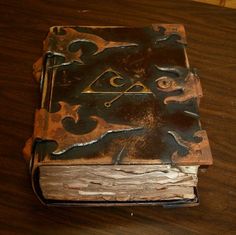
Aradia, Book of
The book Aradia: Gospel of the Witches by Charles G. Leland (1899 and often reprinted) presented traditional witchcraft teachings from Italy, which Leland claimed he obtained from a Florentine fortune-teller and hereditary witch in the late nineteenth century. This book is clearly one of the inspirations of the modern witchcraft revival launched by Gerald B. Gardner, and it has furnished some materials for the contemporary witches’ Book of Shadows, the ritual book used by modern witch covens
Arael
One of the spirits that the ancient rabbis of the Talmud believed to be a princesa and governor over the “People of the Birds”.
Aramaic
An ancient language widely written and spoken by the Semitic tribes of the Near East around 400 to 300 B.C. Eventually, it was almost completely replace by the Hebrew language. Today, it is nearly a dead language know only by about 75,000 people worldwide.
Arariel
An angel, who, according to the rabbis of the Talmud, takes charge of the waters of the earth. Fishermen invoke him so that they may take large fish. Arariel has also traditionally been invoked as a cure for stupidity.
Ararita
According to occultist Éliphas Lévi, Ararita is “the verbum inenarrabile of the sages of the Alexandrian School,” which “Hebrew Kabalists wrote Javeh and interpreted by the sound Ararita, thus expressing the triplicity of the secondary kabalistic principle, the dualism of the means and the equal unity of the first and final principle, as well as the alliance between the triad and the triad and the tetrad in a word composed of four letters, which form seven by means of a triple and double repetition.”
Arbatel
A magical ritual published at Basle in 1575. The text is in Latin and appears to have been influenced by Paracelsus. It is of Christian, not Jewish, origin, and although the authorship is unknown, it is probably the work of an Italian. Only one of its nine volumes still exists: dealing with the institutions of magic, the work is entitled Isagoge, which means “essential or necessary instruction.”
The book introduces the ritual of the Olympic spirits who dwell in the air and among the stars and who govern the world. There are, we are told, 196 Olympic provinces in the universe: thus Aratron has 49; Bethor, 42; Phaleg 35; Och, 28; Hagith, 21; Ophiel, 14; and Phul, 7. Each of the Olympic spirits rules alternately for 490 years. They have natural sway over certain departments of the material world, but outside these departments they perform the same operations magically. Thus Och, the ruler of solar affairs, presides over the preparation of gold naturally in the soil. At the same time, he presides magically over the preparation of that metal by means of alchemy.
The Arbatel states that the sources of occult wisdom are to be found in God, spiritual essences, and corporeal creatures, as well as in nature, but also in the apostate spirits and in the ministers of punishment in Hell and the elementary spirits. The secrets of all magic reside in these, but magicians are born, not made, although they are assisted by contemplation and the love of God. It is sufficient to describe the powers and offices of one of these spirits.
Aratron governs those things that are ascribed astrologically to Saturn. He can convert any living thing into stone, can change coals into treasure, gives familiar spirits to men, and teaches alchemy, magic, medicine, and the secret of invisibility and long life. He should be invoked on a Saturday in the first hour of the day. The Arbatel was said to be one of the best authorities on spiritual essences and their powers and degrees.
Arcane
That which is hidden or secret; usually refers to rites associated with the mystery religions or secret societies.
Arcanum, Great
The great secret that was supposed to; “lie behind all alchemical and magical striving.” “God and Nature, alike,” wrote Éliphas Lévi, “have closed the Sanctuary of Transcendent Science … so that the revelation of the great magical secret is happily impossible.” Elsewhere he states that it makes the magician “master of gold and light.”
Ardat Lile
Ancient Semitic female spirit or demon that wed human beings and worked great harm in the dwellings of men.
Area Focusing
When the same area is the focus of poltergeist activity continuously.
Area Possession
When one or more demons occupy a physical space, often a home, building, or other structure. Sometimes this includes the possession of certain objects.
Argus
(Greek ) A 100-eyed giant (also called Panoptes) who was assigned by the goddess Hear, wife of Zeus, to guard Io, of whom she was jealous. Zeus, who favored his mistress Io, changed her into a heifer to protect her from Hear. The god Hermes dispatched by Zeus to rescue Io; slew Argus, by lulling his eyes to sleep with music and then severing his head. In one version of the story, Argus subsequently became a peacock; in another, Hear transplanted his eyes onto the peacock’s tail. Also known by the name Argus was the old dog of Odysseus, Greek leader during the Trojan War. When his master returned after 19 years, Argus recognized him and promptly died.
Ark of the Covenant
The golden chest, in which; were kept the tablets on which the laws of the ancient Israelites were inscribed. The Ark was constructed of Setim wood, and coated inside and out with pure gold. Its lid, the “Propitiatory”; is also covered in Gold. For many years the Ark was kept in the Temple of Solomon, until the fall of Jerusalem when Jeremiah was said to have hidden it in a cave until God could gather his people again. Despite considerable research in the final resting place of the Ark, to date nobody has succeeded in locating it.
Arica
A psychophysical system developed by Oscar Ichazo and named after the town in Chile where Ichazo first trained members. The system includes meditation and exercises connected with vibrations, sounds, and movements to produce a state of enhanced consciousness called “Permanent 24.” Arica is a body-mind system adapted from a variety of Eastern and Western mystical teachings of a Gurdjieff type. Teaching centers have been established in a number of American cities, with headquarters at the Arica institute, 150 Fifth Ave., New York, NY 10011.
Ariel
One of the two spirits supposed to have attended John Beaumont, the seventeenth-century English writer on witchcraft.
Arignote
An early ghost story told by the ancient Greek writer Lucian (second century C.E.). The story relates that at Corinth, in the Cranaüs quarter, there was a certain house that no one would inhabit, because it was haunted by a specter. A man named Arignote, well versed in the lore of Egyptian magical books, shut himself in the house to pass the night and began to read peacefully in the court.
Soon the specter made its appearance, and in order to frighten Arignote, it first took the form of a dog, then that of a bull, and finally that of a lion. But Arignote was not at all disturbed. He admonished the specter by a magic spell that he found in his books, and he commanded it to go to a corner of the court, where it disappeared.
On the following day the spot to which the specter had retreated was dug up, and a skeleton was found. When it was properly buried, the ghost was not seen again. This anecdote is an adaptation of the adventure of Athenodorus, which Lucian had read in Pliny.
Arioch
(Hebrew meaning “fierce lion”). Demon of; vengeance according to some demonologists. Arioch differs from Alastor and occupies himself only with vengeance in particular cases where he is employed for that purpose.
Ariolists
Ancient diviners whose special occupation was called ariolatio because they accomplished their divination by means of altars. They consulted demons on their altars, stated Dangis; they observed whether the altar trembled or performed any marvel and predicted what the Devil inspired them with. François de la Tour Blanche maintained that these people ought to have been put to death as idolators. He based his opinion on Deuteronomy 18 and Revelation 21, which assert that idolators and liars shall be cast into the lake of fire and sulphur, which will be their second death.
Arithmancy
Divination by means of numbers (sometimes wrongly called Arithmomancy). The ancient Greeks examined the number and value of the letters in the names of two combatants and predicted that he, whose name contained the most letters, or letters of the greatest value, would be the victor. Using this science, diviners foretold that Hector would be overcome by Achilles.
The Chaldeans, who also practiced it, divided their alphabet into three parts, each composed of seven letters, which they attributed to the seven planets, in order to make predictions from them. The Platonists and the Pythagoreans were also strongly addicted to this method of divination, which is similar to certain aspects of the Jewish Kabala.
Arphaxat
1. A Persian sorcerer who was killed by a thunderbolt (according to Abdias of Babylon) as St. Simon and St. Jude were martyred.
2. In the account of the possession of the nuns of Loudun, there is also a demon known as Arphaxat, who took possession of the body of Louise de Pinterville
Arrival Case
A situation where someone dreams or has a hunch they will meet someone and soon does.
Ars Notoria
Title of a work of magical invocations and prayers attributed to Solomon and therefore related to the celebrated Key of Solomon the King, one of the most famous grimoires, or book of ceremonial magic. Ars Notoria is known in the English translation of Robert Turner (Sloane Manuscript 3648, British Library, London), published by him in 1657.
Artefact
In parapsychology, this is a false piece of evidence of paranormal phenomena due to some extraneous normal influence.
Asal
Known as the King of the Golden pillars in Irish Celtic mythology. He was the owner of seven swine, which might be killed and eaten every night, yet were found alive every morning.
Asanas
The physical positions, or postures, of hatha yoga. Many of these are named after living creatures, e.g., cow, peacock, locust, cobra, lion. Early yoga treatises state that there are 8.4 million asanas, of which 84 are the best and 32 the most useful for the health of mankind. Hatha yoga should properly be combined with spiritual development.
Asatru
The term Asatru (literally, being true to the Æsir or Germanic deities) is the most used term for the modern reconstructed forms of the magical polytheistic religions of the German and Scandinavian people that have appeared in Europe and North America since the 1960s.
In North America, the first such group, and for many years the most prominent, was the Asatru Free Assembly. The assembly was founded in 1972 as the Viking Brotherhood by Stephen A. McNallen. Shortly after founding the new organization to give public expression to the belief that McNallen had slowly appropriated, he went into the army. The brotherhood became largely moribund, though he continued to publish the quarterly periodical, The Runestone.
Returning to civilian life in 1976, McNallen worked on refining the idea of the brotherhood and soon changed its name to Asatru Free Assembly. The assembly rejected collective ideologies (especially fascism) and emphasized individualism, courage, integrity, and independence. A wide variety of belief and practice was allowed within the general framework of acknowledgment of the deities.
The Asatru people also saw themselves as over against the Odinists, who emphasize a single deity rather than the whole of the deities. Celebrations were held to recognize the deities, such as Yule (December 22) and the summer solstice.
Other holidays included March 28, Ragnar’s Day, when the assembly remembered the sacking of Paris in 845 by the Viking Ragnar Lobrok. Local groups called Skeppslags, or ship’s crews, consisted of 3 to 15 members. Also, interest groups were formed as guilds to develop skills in activities from sewing to brewing. The assembly reached a crisis in 1987, when McNallen felt unable to continue as the primary leader and disbanded the organization.
In the meantime, a number of mostly small local Norse groups had arisen, some falling victim to racial ideologies that alienated them from the larger body of Neo-Pagans. Among his last productions was the publication of a book of Norse rituals. The fall of the Asatru Free Assembly also left a vacuum just as Norse Paganism appeared to be in a growth phase. Former members began to form new associations such as the Asatru Alliance and the Ring of Thoth. In 1992 McNallen returned to active leadership as an Asatru, founding founding the Asatru Folk Assembly and reissuing The Runestone.
Asema
(Surinamese Folklore) A blood-sucking sorcerer or witch in the South American country of Surinam. This tradition may be imported from Africa with the slaves. It is usually pictured as an elderly person during the day, which leaves its skin at night and flies off in the form that appears to be a blue ball of light. It uses this shape to feed from people’s vital energy and/or blood. Popular forms of protection against the asema were garlic, eating herbs that would make one’s
blood bitter, and scattering rice or sesame seeds outside one’s door, which it had to pick up before it could enter. When the sesame seeds or rice grains are mixed with the nails of a ground owl, the asema is still compelled to count the seeds or grains, but each time it inadvertently picks up an owl’s nail it lets go off all the seeds or grains it had counted and is forced to start over again.Ash Tree
There are many old superstitions of the wonderful influence of the ash tree. The old Christmas log was of ash wood, and its use was helpful to the future prosperity of the family. Venomous animals, it was said, would not take shelter under its branches. A carriage with its axles made of ash wood was believed to go faster than a carriage with its axles made of any other wood, and tools with handles made of this wood were supposed to enable a man to do more work than he could do with tools whose handles were not of ash. Hence the reason that ash wood is generally used for tool handles.
It was upon ash branches that witches were enabled to ride through the air, and those who ate the red buds of the tree on St. John’s Eve were rendered invulnerable to witches’ influence. In speaking of the ash, reference was often to the mountain ash or rowan tree. The ash tree is regarded with awe in Celtic countries, especially Ireland. The ash may be any of the various trees of the genus Fraxinus, which usually grow quite tall and have close-grained wood; the mountain ash, rowan, or quicken tree, a smaller tree of the genus Sorbus aucuparia, is usually considered separately in the Celtic imagination.
There are several recorded instances in Irish history in which people refused to cut an ash, even when wood was scarce, for fear of having their own cabins consumed with flame. The ash tree itself might be used in May Day (Beltaine) rites. Under the Old Irish word Nin, the ash also gives its name to the letter N in the ogham alphabet. Together with the oak and thorn, the ash is part of a magical trilogy in fairy lore. Ash seedpods may be used in divination, and the wood has the power to ward off fairies, especially on the Isle of Man.
In Gaelic Scotland children were given the astringent sap of the tree as a medicine and as a protection against witch-craft. Some famous ash trees were the Tree of Uisnech, the Bough of Dathí, and the Tree of Tortu. The French poet who used Breton sources; Marie de France (late 12th cent.), wrote a lai about an ash tree.
Ashi-magari
(Japanese Folklore) A ghostly phenomenon from the folklore of Kagawa prefecture on Shikoku, Japan. Ashi-magari is a soft thing, like a kitten or a wad of cotton, which is felt wrapping itself around a person’s leg at night, impeding The ability to walk. If they squeeze it tightly, the ashi-magari is said to feel something like the tail of an animal. While it is not generally visible, it is often believed to be a trick played by tanuki on night travellers.
Ashwathama
(Hindu Folklore) A surviver of the Great War. Who was cursed to live as a leper for his crime of, killing warriors whilst they slept? He is one of the favorite unresolved characters in Indian mythos.
Asiah
According to the Kabala, Asiah is the first of the three classes or natural ranks around the spirits of men, who must advance from the lower to the higher.
Asipu
Priests of ancient Mesopotamia.
Aspidomancy
A little-known form of divination practiced in the Indies. According to the seventeenth-century writer Pierre de Lancre, the diviner traces a circle, takes up his position seated on a buckler (shield), and mutters certain conjurations. He becomes entranced and falls into an ecstasy, from which he emerges to answer his client’s queries with revelations from the devil.
Asport
the disappearance of objects that reappear elsewhere or not at all. (Dematerialization)
Assiah
(or ‘Asiyah, also known as Olam Asiyah? in Hebrew, literally the World of Action) The last of the four spiritual worlds of the Kabbalah—Atziluth, Beri’ah, Yetzirah, ‘Asiyah—based on the passage In Isaiah 43:7. According to the Maseket A? ilut, it is the region where the Ofanim rule and where they promote the hearing of prayers, support human endeavor, and combat evil. Their ruler is Sandalphon. According to the system of the later Palestinian Kabbalah, ‘Asiyah is the lowest of the spiritual worlds containing the Ten Heavens and the whole system of mundane Creation. The light of the Sefirot emanates from these Ten Heavens, which are called the “Ten Sefirot of ‘Asiyah”; and through them spirituality and piety are imparted to the realm of matter—the seat of the dark and impure powers.
Representing purely material existence, it is known as the World of Action, the World of Effects or the World of Making. In western occultism it is associated with the Tarot card suit known as Pentacles (or Coins or Disks, the terminology varies according to the deck). The world of Yetzirah precedes it.
Astara
A hermetic occult fraternity founded in 1951 by Robert and Earlyne Chaney, both former Spiritualists. As a young medium, Robert Chaney had been active in the Spiritualist community in the Midwest in the 1930s and 1940s and was one of the founders of the Spiritualist Episcopal Church in 1941. He became somewhat alienated from Spiritualism after reading theosophical and hermetic literature and accepting some ideas, such as reincarnation, he discovered there. Reincarnation was still a very controversial idea in Spiritualism at the time.
Meanwhile, Earlyne Chaney, who had been a clairvoyant since childhood, had held conversations with a spirit being who called himself Kut-Hu-Mi. She later discovered this being described in theosophical literature. Kut-Hu-Mi told Chaney that she had been selected for a special task—teaching the ancient wisdom to the people of the New Age. The Chaneys resigned from their church in Eaton Rapids, Michigan, moved to Los Angeles, and founded Astara. Astara’s teachings are an eclectic body.
They draw on Christianity, Spiritualism, Theosophy, yoga, and especially on the ancient Egyptian teachings of Hermes Trismegistus, who is believed to have organized the original mystery school from which all others ultimately derive. The Chaneys also have made themselves open to new insights from the world’s religions and philosophies. From Hermes, Astara teaches that God is the only uncreated reality and that he has emanated his seven attributes and all that exists. Hermes taught the seven laws beginning with the magical law of correspondence (“As above, so below”).
The law concisely states that any part of the world reflects the structure of the whole. Other laws deal with basic observations concerning motion, polarity, cycles, cause and effect, gender, and mind. The acceptance of these laws leads to a number of spiritual practices. Central to Astara is Lama yoga, a method of mind expansion originally taught to Earlyne Chaney by the masters. The law of vibration has led to the practice of reciting “Om,” the Sanskrit word believed to encompass the creative energy of the universe. Along with other yogic and meditative techniques, Astara recommends a natural food diet that leans toward vegetarianism. Astara is headquartered in a complex in Upland, California, where members congregate and regular Sunday services and a cycle of conferences and retreats are held throughout the year.
Most members relate to Astara through a set of correspondence lessons, the Book of Life. The Book of Life lessons function as a guru to the student and replace any need for a personal teacher. Apart from the lessons, both Chaneys have written a number of books and shorter works. In 1988 there were approximately 18,000 students.
Astragalomancy
A system of divination involving casting small bones (each associated with particular interpretations), rather in the manner of throwing dice. Later developments in fact utilized dice in place of bones, the numbers being associated with letters, to form words which had a bearing on the questions put by the diviner. An associated preliminary ritual was sometimes used, involving writing a question on paper and passing it through the smoke of burning juniper wood.
Astral Being
A type of suspected spiritual life forms. Astral being is a general term for beings found on planes of existence higher than the physical plane. An astral being need not hail from the astral plane. It may be a being from any of the other higher planes. Intelligence varies widely among the many forms of astral beings.
The majority of astral beings exhibit low intelligence. Generally, the higher the plane a being comes from, the greater the intelligence. Size, as a rule, has little to do with ability when it comes to astral beings. In fact, some of the most powerful beings a projector will come across appear as minuscule creatures.
Astral Body
What we call the spirit or soul, the part of the body that survives death of the physical body. It’s also the portion of the spirit that can travel in the astral plane, creating what we call astral travel or crisis apparitions.
Astral Plane
A spiritual dimension or parallel universe comprised of spiritual energy.
Astral Projection
The alleged ability to separate the consciousness from the physical body. Reported most often when while undergoing crisis, extreme pain or anesthetized. The spirit is believed to be able to travel outside the body to either the astral plane or another location on this plane. Most detractors believe it is simply a dissociative process of the brain to protect the mind from stress. (See also: O.B.E.).
When the spirit travels outside the body to either the astral plane or another location on this plane.
Astral Spirit
The major use of astrology in centuries he word astral on its own means; relating to, resembling or emanating from the stars. Astral spirits are those formerly thought to inhabit heavenly or celestial objects for example stars or planets. Astral spirits in the Middle Ages were represented as spirits of the dead, spirits that originated in fire and also as fallen angels.
Astral Travel
Belief or theory that a person’s spiritual awareness can temporarily detach itself from the physical body, remaining connected by what is called the “silver cord,” and experience things in other locations, time frames or dimensional planes. Some refer to this as “Astral Projection” or “Mind Projection.
Astromancy
A form of divination by the reading of the astrological chart has constituted the major use of astrology in centuries past. It assumes a deterministic worldview in which the stars indicate patterns into which individuals are locked and events are destined to occur. Criticism of astrology has largely been directed at astromancy, with religious scholars attacking the deterministic worldview and scientists attacking the accuracy of astrological predictions. Contemporary astrology, especially that based in psychology and growing out of the work of Dane Rudhyar, has rejected astromancy as a perspective beyond the ability of astrology.
Modern astrologers believe that the horoscope shows planetary influences operating upon a person but the individual remains free to respond to those influences in a variety of ways. In like manner, some astrologers claim that they can predict heightened pressures operating on society but not specific events. Thus astrology can be of practical assistance in a counseling situation and usefully applied to understanding the stock market, but it cannot predict upcoming events in a person’s life or relationships or the movement of specific stocks. Most contemporary textbooks carry at least a passing reference to astromancy, and rejection of it, as part of their introduction to the topic.
Atavism
Reversion to an earlier, ancestral type.
Athame
A knife which is one of the primary tools employed by modern Wiccans (or Witches) in their rituals. It has a black handle and double-edged blade. The blade is never used for cutting and no attempt is made to keep it sharp, though often great care is taken to make it artistic. The athame is normally used to cast the circle at the beginning of rituals, thus establishing the magical space within which rituals are performed.
It is also used for summoning and banishing the spirit entities who are called to be present as guardians of the ceremony. At the climax of the ritual at which wine is shared, the athame is often plunged into the chalice of wine (symbolic of the sex act). Although occasional pieces of art show figures identified as Pagans or Witches holding a knife, knives were conspicuous by their absence in European Witchcraft texts. They appear to be one of the several elements introduced by Gerald B. Gardner (1884-1964), who was largely responsible for creating modern Neo-Pagan Witchcraft. Gardner had spent most of his life as a British civil servant in Asia.
While in Malaysia, he became familiar with the local ritual weapon known as the kris. This figures identified as Pagans or Witches holding a knife, knives were conspicuous by their absence in European Witchcraft texts. They appear to be one of the several elements introduced by Gerald B. Gardner (1884-1964), who was largely responsible for creating modern Neo-Pagan Witchcraft. Gardner had spent most of his life as a British civil servant in Asia. While in Malaysia, he became familiar with the local ritual weapon known as the kris. This magical religion built around the worship of a female deity. He drew from a multitude of sources, but added the ritual knife from his knowledge of the kris. The athame is one of the most distinctive contributions of Gardner to modern magical practice.
Athanor
[F., fr. Ar. at-tannur, fr. Heb. tannur an oven or furnace.] 1). A digesting furnace; formerly used by alchemists. It was so constructed as to maintain uniform and durable heat. 2). According to Philo stratus in his Life of Apollonius, Athanor is an occult hill surrounded by mist except on the southern side, which is clear. It has a well, which is four paces in breadth, from which an azure vapor ascends, which is drawn up by the warm sun. The bottom of the well is covered with red arsenic.
Near it is a basin filled with fire from which rises a livid flame, odorless and smokeless, and never higher or lower than the edge of the basin.
Also there are two black stone reservoirs, in one of which the wind is kept, and in the other the rain. In extreme drought the rain cistern is opened and clouds escape, which water the whole country. This description should be interpreted as alchemical symbolism, since the Athanor was also the furnace supplying heat for the alchemical process. The term Athanor is also employed to denote moral and philosophical alchemy.
Atlantis
A mythical island continent said to have existed in the Atlantic Ocean in ancient times and was swallowed by the ocean in an earthquake. The earliest mention of Atlantis is found in Plato’s two dialogues Timaeus and Critias, from which it emerged as a topic of fascination and speculation over the centuries. It entered occult perspectives through the writings of Helena Petrovna Blavatsky, cofounder of the Theosophical Society, in the nineteenth century and has been a topic of popular speculation in the twentieth century.
For many, Atlantis has replaced the biblical Garden of Eden as a mythical original home for the human race. For Plato, Atlantis was a useful myth for conveying several lessons he wanted to make about government and the nature of city-states.
In the twentieth century it has been integrated into a myth about overreliance on technology as opposed to personal spiritual and psychic awareness. Plato described Atlantis as a large land located beyond the Straits of Gibraltar. It was a powerful land able to conquer much of the Mediterranean basin, but at the height of its power it was destroyed by geologic forces.
Plato supposedly learned of Atlantis as a result of the Athenian lawgiver Solon, who had brought the story to Greece from Egypt several centuries earlier. Over time the Atlantis myth grew in proporition, so that by the Middle Ages, Atlantis had been transformed into a massive mid-Atlantic continent. Eventually it became one of the destinations visited by explorers in the European fantastic voyage literature, the most prominent being Captain Nemo in Jules Verne’s “Twenty Thousand Leagues under the Sea” (1870). Interest in Atlantis was revived in 1882 with the publication of Ignatius Donnelly’s Atlantis, the Antediluvian World. He argued that Atlantis was the lost origin point of humanity, the place where the race moved out of barbarism to a civilized state.
For Donnelly, Atlantis explained many of the prominent similarities between the culture of Egypt and that of Latin America. He believed that the worldwide myth of the flood was really the account of Atlantis’s demise. Blavatsky adopted Donnelly’s ideas and integrated Atlantis into the theosophical story of the evolution of the human race. She hypothesized the evolution of humanity through a series of “root races.” Lemuria, the Pacific equivalent of Atlantis, was the home of the third root race; Atlantis, of the fourth root race.
Earth is currently populated by the fifth root race. Blavatsky’s ideas were expanded by such Theosophists as Charles W. Lead beater, W. Scott Elliott, and Rudolf Steiner. In the 1920s the subject of Atlantis was taken up by Scottish journalist and anthropologist Lewis Spence, who eventually wrote four books on the subject, beginning with The Problem of Atlantis (1924). He passed along speculations to psychic Edgar Cayce (1877-1945), who frequently spoke of Atlantis, primarily as he described the past lives of his clients.
Many were seen as people who had escaped to such places as Egypt or Peru following the destruction of the continent. Cayce pictured Atlantis as a land of high technological achievement, even by twentieth-century standards. Atlanteans understood understood universal forces and had learned to fly, had central heating, sonar, and television. Central to Atlanteans technologies was a firestone, a large crystal that collected energy from the stars and then gave off energy to power the technology of the land. The misuse of the crystal’s power led to the destruction of Atlantis.
The Association for Research and Enlightenment, an organization formed to promote and perpetuate Cayce’s work, gathered his comments about Atlantis and published them in two books, Atlantis: Fact or Fiction (1962) and Edgar Cayce on Atlantis (1968), which called attention to a Cayce prediction that a remnant of Atlantis would emerge at the end of the 1960s near the island of Bimini. No such emergence occurred, but a number of Cayce’s believers travel to the area in search of underground remnants of the continent. Amid the numerous speculations about the location of the lost continent, one seems to have emerged as the most likely. In 1969 Greek archaeologist Angelo Galanopoulos released data he had collected on the island of Thera. Galanopoulos had discovered an ancient Minoan city, buried in layers of volcanic ash. It was the center of a once-powerful city-state that was wiped out suddenly by the volcano.
With the exception of its location in the Mediterranean rather than outside the Straits of Gibraltar, it fits most precisely the several descriptions of Atlantis reported by Plato. From Cayce the idea of Atlantis was picked up in the New Age movement. In 1982, Frank Alper, a channel from Arizona, issued an important channeled work, Exploring Atlantis, in which he picked up the account in Cayce’s writings about the crystal on Atlantis. The three-volume work, which purports a crystal-based culture on the lost continent, became the basis of the faddish use of crystals by New Agers in the 1980s. In particular, Alper describes in some detail the techniques of crystal healing.
Atman
(Sanskrit: “breath” or “self”) Basic concept in Hindu philosophy, describing that eternal core of the personality that survives death and transmigrates to a new life or is released from the bonds of existence. Atman became a central philosophical concept in the Upanishads. It underlies all aspects of personality, as Brahman underlies the working of the universe. The schools of Samkhya, Yoga, and Vedanta are particularly concerned with atman. See also; Soul. Usually translated “Soul” but better rendered “Self.” in the Hindu religion, Atman means the union of the collective human soul with God (Brahma), eventually merged in the absolute totality of Brahman.
It is believed that the soul is neither body nor mind, nor even thought, but that these are merely conditions by which the soul is clouded so that it loses its sense of oneness with God. In the Upanishads it is said, “The Self, smaller than small, greater than great, is hidden in the heart of the creature” and “In the beginning there was Self.”
Atziluth
(Also: Atzilut) [From Hebrew “Olam Atzilut”? literally “World of Emanation”) the highest of four worlds in which exists the Kabbalistic Tree of Life. Beri’ah follows it. It is known as the World of Emanations, or the World of Causes. In the Kabbalah, each of the Sephiroth in this world is associated with a Name of God, and it is associated with the Suite of Wands in the Tarot.
Augury
An event that is experienced as indicating important things to come; an omen or sign that something is coming; “he hoped it was an augury”; “it was a sign from God”. It also means a prediction, prognostication and indication of the future. For example, “the man had an augury of his future greatness”. As a verb augury is an art or practice of divination. It can be the art or practice of foretelling events by observing the actions of birds etc.; as mentioned above a practice sometimes known as divination.
Aura
The emanation of energy that surrounds all living things.
Aura World
A reflection of our own sphere of existence, composed of the electromagnetic emanations of physical matter, and probably influenced by thought and emotion. It is another dimensional plane proceeding from one in which we exist.
Autoscope
Term used by sir William Barrett in his work “On the Threshold of the Unseen (1917) to denote any mechanical means whereby communication from the unknown may reach us. The unknown may be an extraneous mind, living or dead, or the subconscious. An instrument which facilitates; undetectable automatism of the wrist to facilitate; clearer movements. The most popular autoscope is the planchette, an object used on the modern-day spirit board. (“Ouija Board” is a name for a brand of “Spirit Board“). The planchette, the spirit board and the divining rod are typical autoscopes.
Autoscopy
is associated with looking back at one’s own body from a vantage point or position outside of the physical body. It associated with astral projection, as in the “out of body experience” which occurs when the astral body leaves the physical body and goes on a tour of the physical plane. Autoscopy is also associated with seeing one’s double or duplicate of one’s own body.
Automatic Drawing
Automatism that creates drawings that are allegedly influenced by the deceased.
Automatic Painting
Automatism that creates paintings that are allegedly influenced by the deceased.
Automatic Speech
Also called spirit messages; automatism in the form of speech that is allegedly influenced by the deceased.
Automatic Typing
Automatism that creates messages through a typewriter or computer keyboard.
Automatic Writing
Also called psychography; automatism that creates written messages that is allegedly influenced by the deceased. The phenomena, in which, people write or draw without conscious thought.
1). Direct Psychography – Communication written on paper
2). Mechanical Psychography – Messages received with unconscious control of practitioner’s hand, while the practitioner’s attention is elsewhere.
3). Semi-mechanical Psychography – Messages received with conscious control of practitioner’s hand, allowing them to stop communication at any time, turn pages, etc.
4). Indirect Psychography – The use of an Ouija board to receive so-called spirit messages.
5). Inspirational Psychography – Messages that are written down when someone feels inspired while in contact with a spirit.
Automatism
A process in which the subconscious communicates with the conscious by means of a vehicle such as an Ouija Board, automatic writing, or pendulum swinging.
Autophany
Also called Heautoscopy: seeing your double
Autoscopy
During an out of body experience or near-death experience, the ability to see one’s own physical body when one’s astral body is separated from their physical one.
Av
Fifth month of the Jewish religious Calendar; 11th month of the Hebrew civil year, counting from Tishri. It is a month of 30 days and normally coincides with July-August; Leo the lion is its sign of the Zodiac. Despite numerous references to “the fifth month,” there is no specific mention of Av in the Bible; it is often mentioned, however, in rabbinic sources. In second temple times, a minor festival was celebrated on 15 Av (see Av, Fifteenth of) and the month had joyful associations.
Eventually, however, it was overshadowed by gloom because of the Tishah Be-Av (i.e., Ninth of Av) fast day commemorating the destruction of the First Temple’s by the Babylonians in 586 BCE and the destruction of the second Temple’s by the Romans in 70 Ce.
This date also became linked with many other calamities in Jewish history like semitic magical month. Crossing a river on the twentieth of that month was supposed to bring sickness. Ancient texts state that if a man should eat the flesh of swine on the thirtieth day of Av, he will be plagued with boils. Av is also an ancient Egyptian term for the heart. Since the heart was the seat of the conscience, its preservation was a crucial part of the mummification process
Avalon
[cf. OW aballon, ‘apple’] The Elysium of the Arthurian legends where King Arthur and other heroes went on their death, usually thought to lie on the western seas but sometimes identified with Glastonbury. The English word derives from the Latin of Geoffrey of Monmouth (12th cent.), Insula Avallonis, ‘Isle of Apples’. In Welsh it is still known as Ynys Afallach, ‘Isle of Apples’. Cf. Emain Ablach [Irish, fortress of apples], the true home of Manannán mac Lir. In the Arthurian romance by Layamon (12th cent.) Argante is the queen of Avalon. Geoffrey of Monmouth notes briefly in his history that King Arthur ‘was carried to the Island of Avalon for the healing of his wounds’; in a later work, The Life of Merlin, he elaborates upon this, saying Avalon is ruled by nine sisters, the eldest and wisest being Morgan. It is an earthly paradise, also called The Island of Apples or the Fortunate Isle, where crops grow untended, ‘apple trees spring up from the short grass of its woods’, and men live for a hundred years or more. Geoffrey obviously associated its name with Welsh afellenau= ‘apple trees’, and with classical descriptions of the Fortunate islands. Others, however, identified it with Glastonbury or, the enchanted Island of Arthurian legend. This terrestrial paradise was known in Welsh mythology as Ynys Avallach (Isle of Apples) or possibly related to the Celtic king of the dead named Avalloc or Afallach. In Geofrey of Manmouth’s twelfth-century chronicle of King Arthur, Historia Regum Britanniae, it was noted that Arthur’s sword was forged in Avalon, and he was returned to Avalon after his last battle so his wounds could heal. In 1191 the monks at Glastonbury announced that it was identical to Avalon and that they had discovered Arthur̵7s burial site. As evidence they produced a cross bearing Arthur’s name and the place’s name, Avalonia, which had been found alongside an exhumed body. Today, replicas of the cross are sold at Glastonbury Abbey.
Avatar
(From the Sanskrit avatāraḥ, descent [of a deity from heaven], avatar : ava, down + tarati, he crosses).
1). the incarnation of a Hindu deity, especially Vishnu, in human or animal form.
2). an embodiment, as of a quality or concept; an archetype: the very avatar of cunning.
3). a temporary manifestation or aspect of a continuing entity: occultism in its present avatar.
4). incarnations of Hindu gods, especially Vishnu.
The doctrine of avatara first occurs in the Bhagavad-Gita, where Krishna declares: “For the preservation of the righteous, the destruction of the wicked, and the establishment of dharma [virtue], I come into being from age to age.” Vishnu is believed to have taken nine avatara, in both animal and human form, with a tenth yet to come. The avatara of Shiva are imitations of those of Vishnu. The idea of the avatar or avatāra is central to Hindu mythology especially to the concept of the god “Vishnu”. An avatar is the earthly form assumed by a deity. Avatar is also a term used in Hindu religion to indicate the incarnation of a deity. Avatara is one of the Hindu gods who has taken on animal or human form in different ages for the welfare of the world.
In Hindu mythology, the god Brahma (originally known as the creator Prajapati) became successively incarnated as a boar, a tortoise, and a fish, to assist the development of the world in prehistory. Certain Hindu scriptures ascribe these incarnations to the god vishnu (the preserver), but since the manifestation of divine power takes many different forms in Hindu mythology, the distinction is academic. Various scriptures ascribe to Vishnu ten major incarnations:
(1) Matsya (the fish), associated with legends of a great deluge in which Manu, progenitor of the human race, was saved from destruction;
(2) Kurma (the tortoise), whose back supported great mountains while the gods and demons churned the ocean to retrieve divine objects and entities lost in the deluge;
(3) Vahura (the boar), who raised up the earth from the seas;
(4) Nara-sinha (the man-lion), who delivered the world from the tyranny of a demon;
(5) Vamana (the dwarf), who recovered areas of the universe from demons;
(6) Parasu-rama (Rama with the axe), who delivered Brahmins from dominion by the warrior caste during the second age of the world;
(7) Rama, hero of the religious epic Ramayana, who opposed the demon Ravana;
(8) Krishna popular incarnation chronicled in the religious epic Mahabharata (especially in the Bhagavad-Gita section) and Srimad Bhagavatam;
(9) Buddha, the great religious teacher; and,
(10) Kalki, an incarnation yet to come, who is prophesied to appear on a white horse with a sword blazing like a comet, to destroy the wicked, stabilize creation and restore purity to the world. In other religious works, as many as 22 incarnations are listed, including various great saints and sages.
According to Hindu belief, a perfected human soul has no further karma (action and reaction) and is absorbed into divinity at death, but may elect to be incarnated for the good of the world. The deity Shri Krishna, in the Bhagavad-Gita (4:7-8) specifically promises: “Arjuna, whenever there is decline of dharma (righteous duty), and unrighteousness is dominant, then I am reborn. For the protection of the virtuous, the destruction of evil-doers, and to reestablish righteousness, I am reborn from age to age.” Belief in repeated divine reincarnations of the deities for the good of the world, as distinct from one unique Messianic event, is one of the major theological differences between Hinduism and Western religions such as Judaism and Christianity.
Avebury
One of the most spectacular of the ancient megalithic monuments in the British isles, far surpassing in size the more well-known Stonehenge. Like Stonehenge, it is located in Wiltshire. Enough of the monument has survived that a picture of what it looked like when it was completed can be reconstructed. The large ritual area is surrounded by a circular earth embankment some 1200 feet in diameter. Immediately inside of the embankment is a ditch, and on the inner edge of the ditch there once stood a circle of some 100 stones; a number of which once formed the western half of the circle remain in place. Inside the large circle were two inner circles, both of approximately 340 feet in diameter. In the center of the circle to the north is a cove, but its purpose is unknown. There was a is surrounded by a circular earth embankment some 1200 feet in diameter. Immediately inside of the embankment is a ditch, and on the inner edge of the ditch there once stood a circle of some 100 stones; a number of which once formed the western half of the circle remain in place. Inside the large circle were two inner circles, both of approximately 340 feet in diameter. In the center of the circle to the north is a cove, but its purpose is unknown. There was a single stone, surrounded by a rectangle of smaller stones, in the center of the southern circle. All of the stones appeared unfinished and were gathered from the surrounding countryside. Similar stones lie scattered on the landscape of the region to this day. Avebury has been inhabited since late Neolithic times. Then, around 2600 B.C.E., the southernmost inner circle was erected, and it appears to have been used for a variety of ritual purposes. The northernmost inner circle was erected soon afterwards. It was quite different in that it had a double ring of stones. It has been suggested that it was possibly used for funeral rites. Next, a ditch was dug around the entire site and the earth taken from the excavation was used to form the rampart like outer circle. A double line of stones, generally called West Kennet Avenue, led from Avebury to the south toward an associated monument about a mile away. There were at one time as many as 200 hundred stones along the avenue, but less than 20 remain today. Avebury probably was completed around 2000 B.C.E. And utilized for more than a millennium. As the megaliths in Britain have been studied, Avebury has been placed in the larger context of sites scattered across the land. It has been studied in light of the alignments its stones might offer to various prominent planetary bodies. Alexander Thom, who pioneered such study, did very accurate measures of the remaining stones, and has suggested they demonstrate a quite sophisticated knowledge of the moon’s movements. Others have noted that so many stones are missing that determining alignments is quite difficult if not impossible. The circles were probably places in which a large number of the people in the surrounding countryside gathered, but their essential functions remain a matter of widespread speculation.
Avenar
A fifteenth-century astrologer; who promised the Jews on the testimony of the planets, their messiah would arrive without fail in 1444, or at the least; in 1464. He gave, for his guarantors, Saturn, Jupiter, “the crab, and the fish.” the Jews were said to have kept their windows open to receive the messenger of God who did not arrive.
Avichi
A theosophical concept of “hell.” deriving from the Sanskrit word for; “isolation.” Although it is a place of torment, it differs in great degree from the dominant conception of hell. Its torments are the torments of fleshly cravings, which for want of a physical body cannot be satisfied. People remain after death exactly the same entity as before, and, if in life an individual has been obsessed with strong desires or passions, such obsession still continues, though in the astral plane the satisfaction of these desires or passions is impossible.
These torments are of infinite scope, whether it be the confirmed sensualist who suffers them, or more ordinary people who, without being bound to the things of the flesh, have nevertheless allowed the affairs of the world to loom too largely in their lives and are now doomed to regret the small attention they have given to higher matters. Avichi is a place of regrets for things done and things un-done. Its torments are not, however, eternal, and with the passing of time—of which there is no measure in the astral plane— they are gradually discontinued at the cost of terrible suffering.
Avidya
(Sanskrit; Pali, avijja) A Hindu religious term also used in Theosophy to denote the ignorance of mind about the workings of karma, the Four Noble Truths, and the Three Jewels (triratna). Avidya is the root cause of continued involvement in SA? Sara and the experience of suffering by which one remains confused about the true nature of reality. Avidya also causes those commencing the spiritual pathway to expend effort in vain. It is the antithesis of Vidya, or true knowledge.
Axinomancy
Divination by means of a hatchet or a woodcutter’s axe. Diviners predicted the ruin of Jerusalem with Axinomancy (Psalm 74). Francois de la Tour-Blanche, who remarked upon this, does not tell us how the diviners made use of the hatchet, but it may have been related to one of the two methods employed in ancient times.
Ayahuasca
[American Spanish, from Quechua, rope of the dead, narcotic: aya, corpse + huasca, rope.] A hallucinogenic brew made from the bark and stems of a tropical South American vine of the genus Banisteriopsis, especially B. caapi, mixed with other psychotropic plants, used especially in shamanistic rituals. Ayahuasca, the hallucinogenic drug favored by many traditional peoples of south America, has in the twentieth century become the center of a major new religious movement in Brazil and began to spread among neo-shamanistic groups in North America and Europe in the 1990s. Ayahuasca (or vine of the dead) is also known as yage (Colombia) and caapi (Brazil). It is prepared from the vine Banisteriopsis Caapi by boiling vine segments with various other plants. The resulting drink contains several hallucinogenic including harmine and/or N, N-dimethyltryptamine. Archeological evidence, including mythology and pre-Columbian rock drawings, strongly suggest that ayahuasca has been used for centuries.
It first became known in the outside world through the account published in 1858 by Manuel Villavicencio, who described his own experiences from its use. The notes of Richard spruce, a British explorer who traveled in the upper reaches of the Amazon in the 1850s, were published in 1908 and subsequent accounts appeared through the twentieth century. These were buried in professional journals until the 1960s when ayahuasca was rediscovered in the context of the wave of interest in LSD and other hallucinogenic throughout the west. In 1968, Michael Harner wrote a pioneering paper, “The Sound of Rushing Water,” describing his experience after taking the drug in 1961 while doing field work in Ecuador. A variety of people during the hippie era sampled ayahuasca but it never gained the popularity of LSD, peyote, or other more easily obtained psychedelic drugs. Among the indigenous peoples of south America, ayahuasca is a healing substance. It is gathered, prepared, and used with proper ceremony and reverence. In the Upper Amazon, Banisteriopsis Caapi is mixed with another plant, Psychotria viridis, and boiled for a full day and then stored until needed for a ceremony. It is believed that in using the drug, the individual is connected to the force that interconnects all things.
At the beginning of the twentieth century, Raimundo Irineu Serra had an apparition of the Virgin Mary as Our Lady of Conceiçao. During the vision, she began to teach him new doctrine. He was under the influence of ayahuasca at the time. From this experience he began to construct what became a new religion, Santo Daime, the religion of the Rainforest. That religion grew slowly, but in the decades since World War II (1939-45) has spread across Brazil and in recent decades has spread to North America and Europe as Brazilian members have migrated. The appearance of ayahuasca as a sacramental substance by an ethnic religious community has presented legal problems. At the beginning of 2000, members were arrested in Spain, and the movement has begun an effort to have the drug legalized in the United states and several countries of Western Europe.
As of the beginning of 2000, the legal situation of ayahuasca consumption is ambiguous. In the United states, for example, the plants from which ayahuasca is made are not illegal; however, some of the substances they contain are. Ayahuasca is not listed as a controlled substance, but N, N-dimethyltryptamine is a controlled substance and illegal. European drug control agencies have demonstrated much more interest in controlling the spread of ayahuasca than has the America Drug Enforcement Agency.
Ayakashi
(Japanese folklore) a type of ghost that appears at sea during a shipwreck.
Ayperor
A count of the infernal empire.
Awakening
An experience in which a person believes he or she has woken up, but actually is still dreaming.
Azael
One of the angels who revolted against God. The ancient rabbis stated that he is chained on sharp stones in an obscure part of the desert, awaiting the last judgment.
Azazel
Place in the wilderness to which one of the two he-goats was sent by the High Priest, as part of the Day of Atonement service in the temple in Jerusalem. This goat was to carry “all the sins” of Israel with it (Lev. 16:22) hence the concept of “scapegoat.” preceding this action, the High priest drew lots over two he-goats, assigning one goat to be sacrificed and the other to be sent away “to Azazel” in the wilderness to be killed (v. 8).
The derivation of the word is not completely clear; the Talmud suggests that AzazeI was a craggy cliff, over which the goat was thrown to its death in the wilderness (Yoma 67b). The ancient rabbis, interpreting “Azazel” as Azaz (“rugged”), and el (“strong”), refer it to the rugged and rough mountain cliff from which the scapegoat was cast down on Yom Kippur when the Jewish Temples in Jerusalem stood. According to the sages of the Talmud, the law of the Azazel is included in the category of h? Ukim; namely, those laws which man’s intellect cannot understand.
In the kabbalistic and midrashic literature, Azazel is considered to be a composite name for two fallen angels, Uza and Azael, who had come down to earth at the time of Tubal Cain and had become corrupted in their ways. Some commentators, medieval and modern, have suggested that Azazel was the name of a desert demon of the second order, guardian of the goat. At the feast of expiation, which the ancient Jews celebrated on the tenth day of the seventh month, two goats were led to the high priest, who drew lots for them, the one for the lord, the other for Azazel. The one on which the lot of the lord fell was sacrificed, and his blood served for expiation. The high priest then put his two hands on the head of the other, confessed his sins and those of the people, charged the animal with them, and allowed him to be led into the desert and set free. And the people, having left the care of their iniquities to the goat of Azazel—also known as the scapegoat—return home with clean consciences. According to Milton, Azazel is the principal standard bearer of the infernal armies. It was also the name of the demon used by mark the heretic for his magic spells. In modern Hebrew slang “go to Azazel” is the equivalents of the English “go to hell.”
Azer
An angel of the elemental fire. According to some accounts, Azer is also the name of the father of Zoroaster, legendary author of the Zend-Avesta, the sacred work of the ancient Persians.
Azoth
[middle English azoc, from old French, from Arabic azza’uq, the mercury : al-, the + za’uq, mercury (from Syriac ziwag , of Iranian origin)] name given by ancient alchemists to Mercury, also known as Astral Quintessence, Flying salve, Animated spirit, Ethelia, and Auraric. Mercury was also considered in alchemy to be the primary source of all metals. The term also implied the essential element of the transmutation process.
Azreal
In Jewish and Islamic lore, Azreal is one of the seven principal archangels and the angel of death.
 Adytum Paranormal Database